Blogs
Practical guidance on planning budgets, proving incrementality, and staying ahead of platform shifts without sacrificing long-term growth.

Showing 6 of 32 Blogs
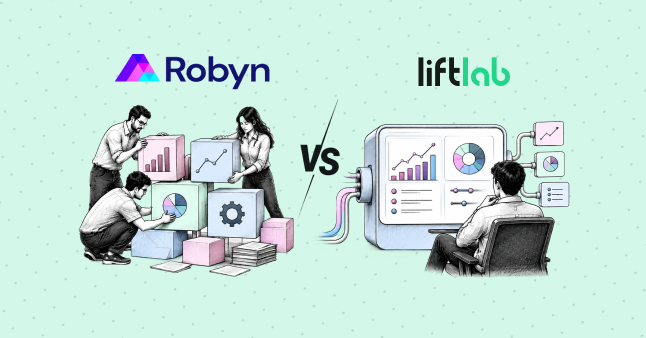
Meta Robyn suits teams that can staff a full MMM practice in-house: data collection, quality control, model design, interpretation, and ongoing maintenance. LiftLab suits teams that would rather hand that work to specialists and plan against a model that is updated regularly, calibrated with experiments, and built for finance-approved budget decisions. Robyn is free software […]
Read the Article →
LiftLab is designed for enterprise marketers who spend $5 million or more each year on brand and performance media, across sectors such as Omnichannel Retail, D2C and Ecommerce, New-Age CPG, Technology, Financial Services, QSR, and Travel. The system is suitable for teams whose aim is to turn causal measurement into a plan approved by Finance, […]
Read the Article →
The story in one line: QSR is a measurement edge case that quietly breaks generic marketing mix modeling. A national TV dollar builds craving over weeks; a delivery-app promotion dollar harvests hunger the same day. A model built for national e-commerce cannot tell them apart, so it averages both into one coefficient and gets the […]
Read the Article →
Retail media incrementality measures whether advertising generated additional CPG sales beyond the purchases that would have happened anyway, a different question than whether an ad and a sale simply occurred close together. Retailer dashboards answer the second question well; they cannot answer the first, because they were never built to. This guide covers what independent […]
Read the Article →
The story in one line: An AI agent answering measurement questions is only as good as the causal data beneath it and the accountability around it. Evaluate the foundation and the guardrails, not the chat window. What the Demo Won’t Show You You watched demos from three different vendors using three chat windows, that seem […]
Read the Article →
The story in one line: Platform changes change the numbers, not the reality. Know which instrument the change touched, and re-baseline that one, rather than relitigating the whole measurement stack. The Dashboard Moved. Your Marketing Didn’t Your reported return on ad spend moved and your marketing did not. No creative shipped. No budget shifted. No […]
Read the Article →