Why Marketing Mix Modeling Needs To Be Agile

LiftLab's Agile Marketing Mix Modeling separates the cost dynamics of ad marketplaces from true consumer demand response. By isolating these layers, it produces response curves that reflect real consumer behavior, not marketplace noise, telling you where your next dollar should go.

What Agile MMM Enables

Agile MMM doesn't just measure what happened; it tells you what to do next. Here's what each output delivers and how it connects directly to budget decisions.

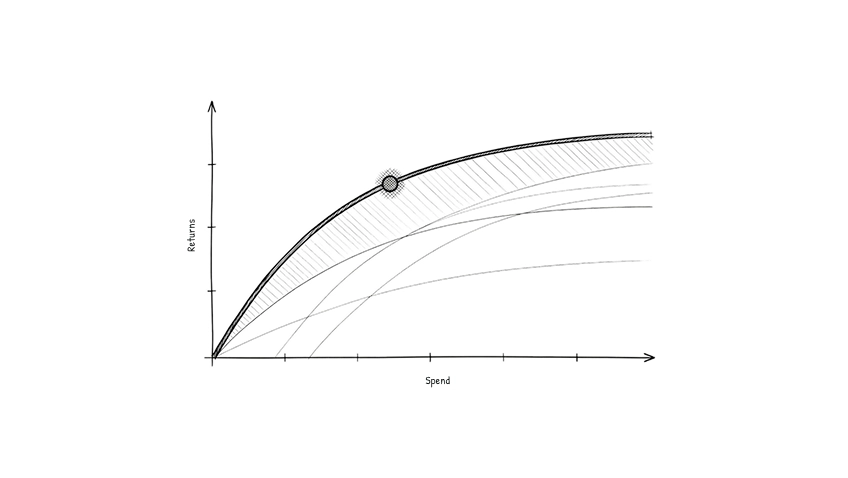
Channel response curves and saturation points

Channel response curves and saturation points

See the exact shape of returns for every channel at every spend level, so you know where to scale, and where you've already hit the ceiling.

Marginal ROI at current spend (next best dollar)

Marginal ROI at current spend (next best dollar)

Know precisely what your next dollar will yield today, specifically, the additional return on investment (ROI) generated by spending one more dollar, rather than using average past performance.

Key drivers and contributions (baseline vs incremental)

Key drivers and contributions (baseline vs incremental)

Separate the results directly caused by your marketing from what would have happened without it, so you optimize based on true incremental effects, not assumed ones.

Time-lag and long-term effects (carryover/halo)

Time-lag and long-term effects (carryover/halo)

We apply Long-Term Multipliers and Multiplicative Modeling to capture the delayed impact and halo effects of brand spend that short-term measurement misses.

Scenario Planning Inputs

Scenario Planning Inputs

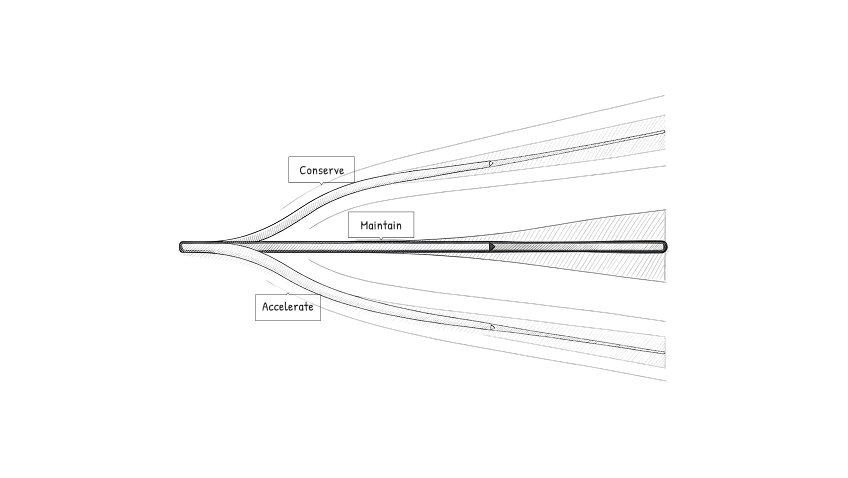
Every model output feeds directly into the Scenario Planner, so your what-if budget questions are grounded in model-based evidence, not spreadsheet assumptions.

How Agile MMM Works

Most marketing mix models are black boxes, but LiftLab's Agile Marketing Mix Modeling uses four distinct layers to address traditional failure modes and provide transparent, actionable insights to support better marketing decisions.
Auction Dynamics (The Cost Layer)

Auction Dynamics (The Cost Layer)

LiftLab isolates daily ad marketplace dynamics (CPM and CPC fluctuations, competitive pressure, and auction volatility) as a separate cost layer, so your consumer response model never gets contaminated by marketplace noise.
Consumer Response (The Impact Layer)

Consumer Response (The Impact Layer)

LiftLab isolates marketplace noise to reveal how ad exposure drives immediate sales and long-term brand equity, clarifying the distinct effects of brand versus performance spend.
PlatformSense (The Speed Layer)

PlatformSense (The Speed Layer)

PlatformSense, LiftLab's daily signal layer, applies live platform data to robust response curves, delivering fast, stable insights that combine agility with accuracy, without the instability of models chasing daily fluctuations.
The Trust Engine (The Confidence Layer)

The Trust Engine (The Confidence Layer)

The Trust Engine, LiftLab’s calibration layer, uses transparent incremental experiments to validate response curves against real-world causal evidence, ensuring the model’s assumptions, accuracy, and trustworthiness.

The Output: The Lift
Curve and Insights

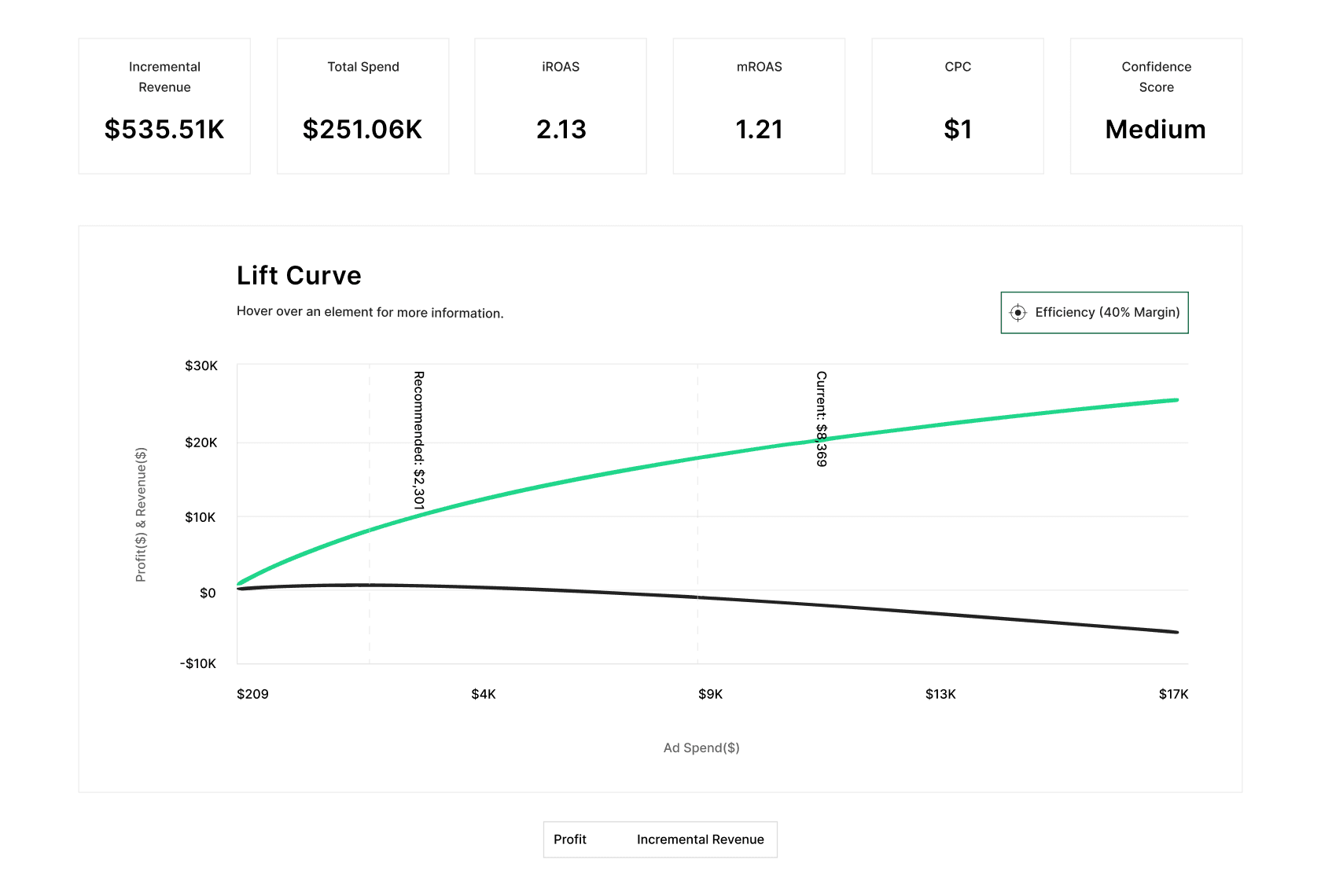
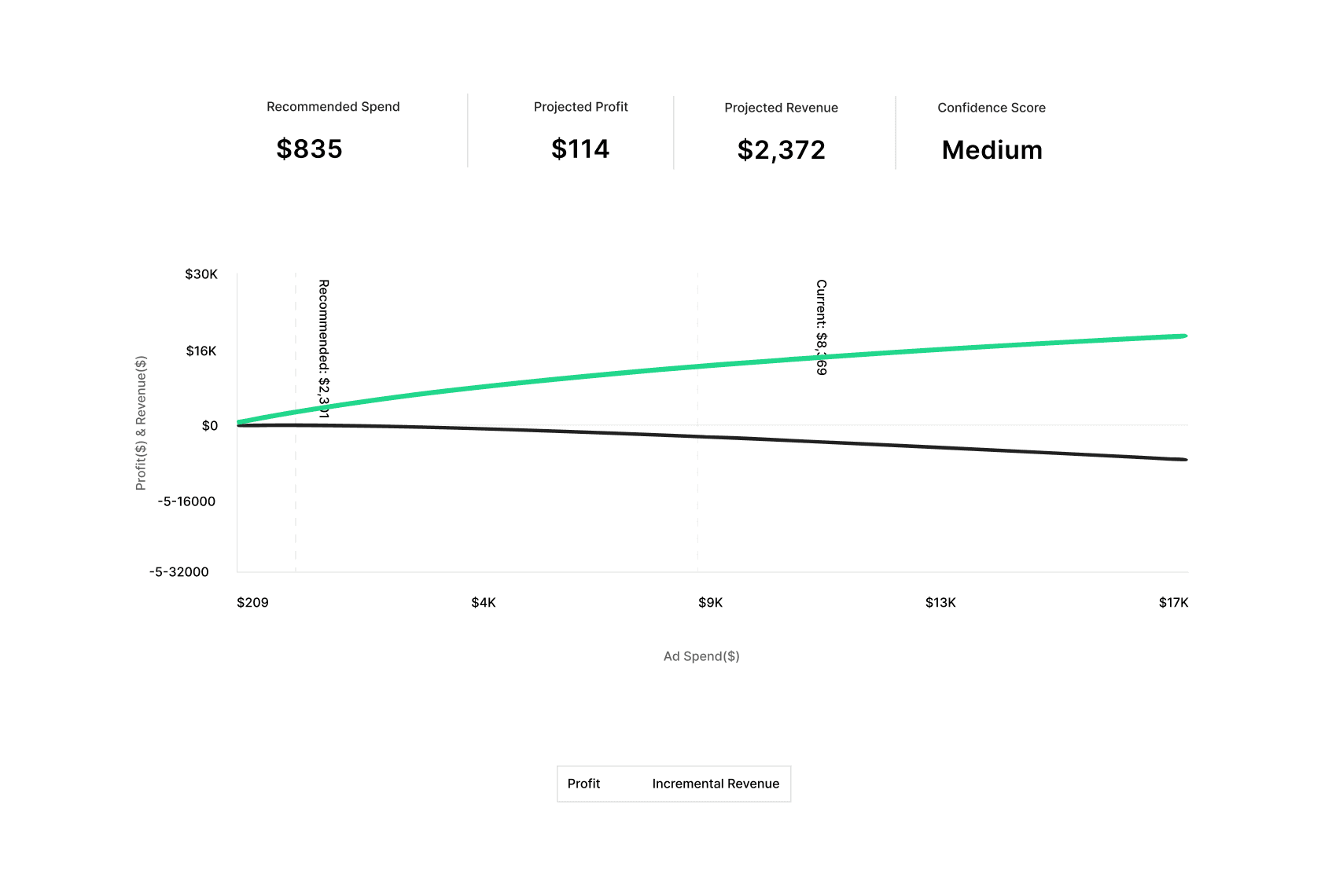
The four-layer model delivers two outputs, powering agile marketing mix modeling as a continuously updated decision engine, not just a quarterly report.

  • The Lift Curve (Curve Viewer)

    The Lift Curve (Curve Viewer)

  • Insights

    Insights

Frequently Asked Questions

Marketing mix modeling quantifies how each channel contributes to sales, but most MMMs conflate how dollars buy impressions with how impressions influence purchasing decisions. LiftLab's agile marketing mix modeling separates these into two distinct stages, producing consumer response curves uncontaminated by ad-auction volatility, so that spend recommendations reflect true demand rather than last month's marketplace conditions.