The plan wasn't wrong when you built it. The problem is that when conditions change, your forecasting system has no mechanism to tell you when it stops being right. CPMs shift overnight. A competitor moves. A channel underperforms. And the plan you have committed to in January is now a liability you're executing anyway because nobody has a better number. That's not a strategy failure. That's a measurement system failure.

CPMs spike. Algorithms shift. A competitor drops pricing. Traditional marketing forecasting methods treat these as noise to be averaged out, which means your team is executing a plan calibrated to conditions that no longer exist.

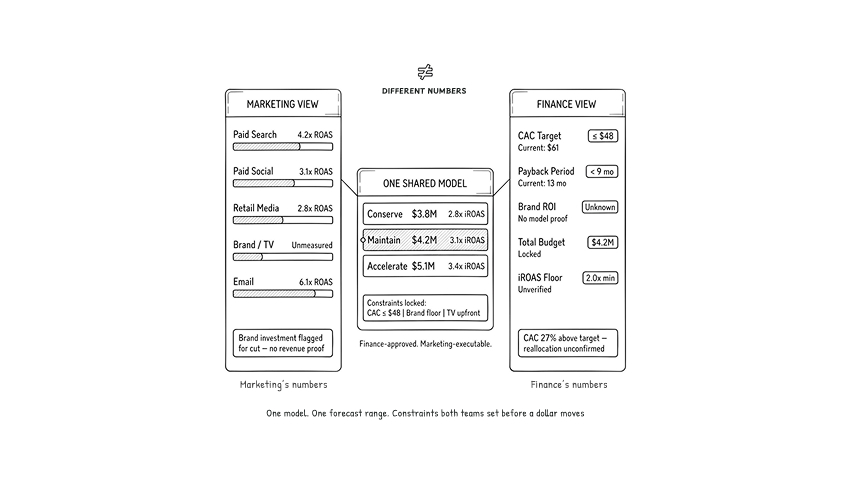
When the number misses, teams argue about whose assumption was wrong instead of learning what changed. LiftLab replaces single-number forecasts with scenario ranges, giving Marketing and Finance a shared language to replan without the blame cycle.

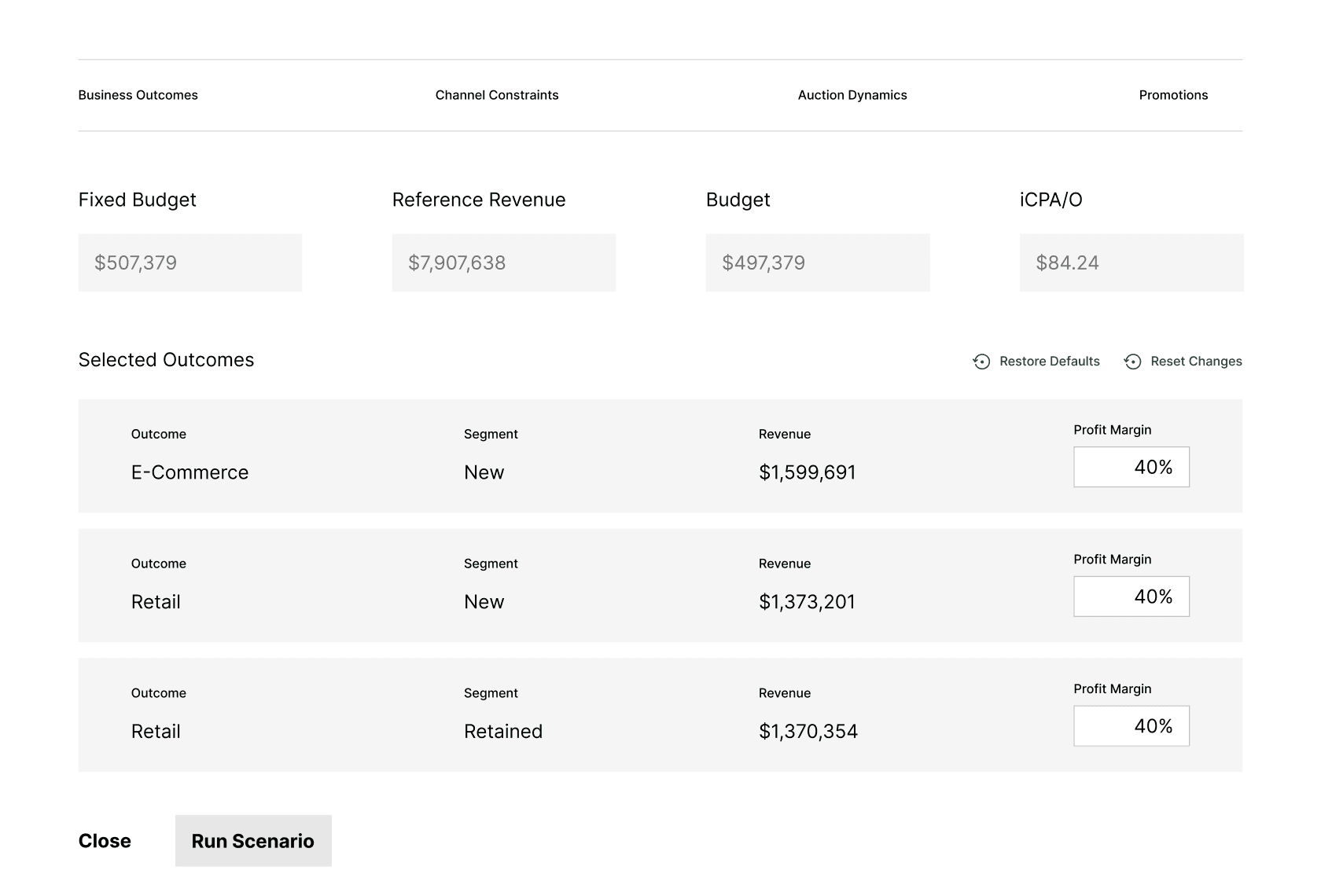
A model that tells you to cut brand spend to hit a short-term ROAS target doesn't know about your locked TV upfront, your minimum platform thresholds, or your CFO's CAC ceiling. Unconstrained optimization produces theoretically perfect plans that no one can execute. LiftLab builds your constraints directly into every simulation. The plan that comes out is one your team can actually execute.
Net result: The plan becomes reactive, budgets get reworked under pressure, and stakeholders lose trust.
Built for the question your team actually asks mid-quarter, not just the one you asked in January.
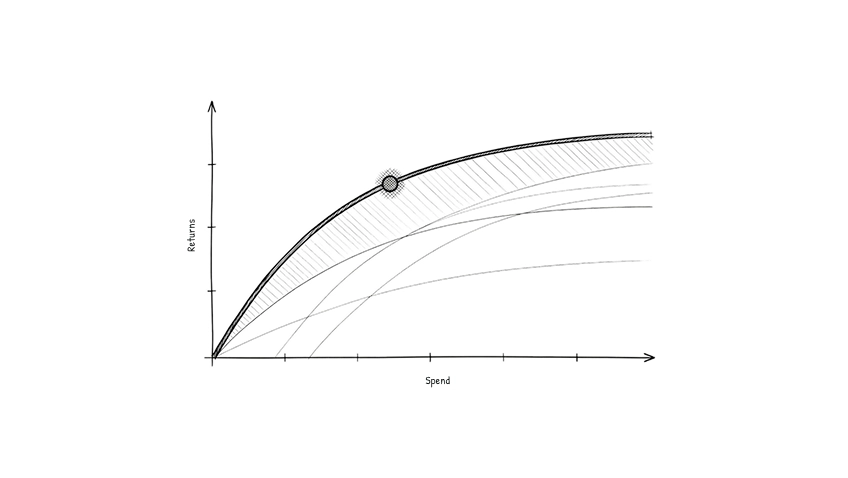
Before spending is locked, run your budget assumptions through LiftLab's AMM response curves. See how each allocation performs across a realistic range of market conditions, not just the baseline. Identify which assumptions your plan is most sensitive to, so you know exactly where it will break first.
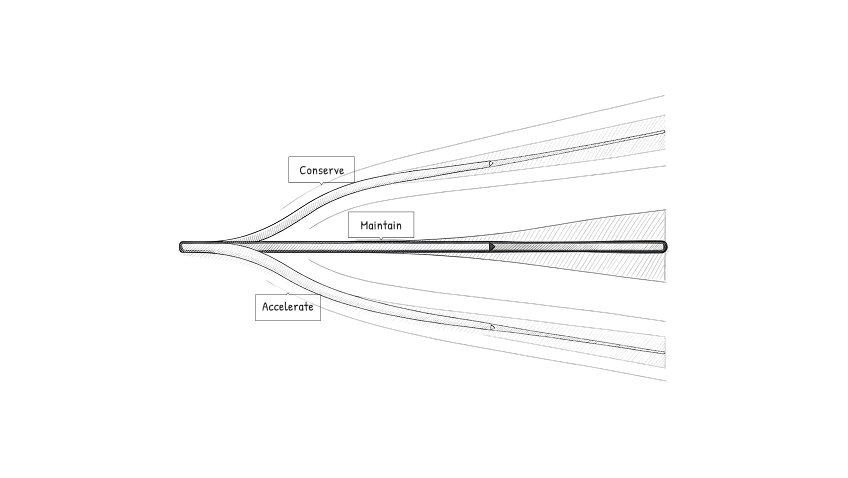
The trade-off between short-term efficiency and long-term brand equity should be a financial decision, not a guess. LiftLab generates Conserve, Maintain, and Accelerate scenarios against your live response curves simultaneously, each returning a forecast range with mROAS delta visible at every reallocation move before you commit.
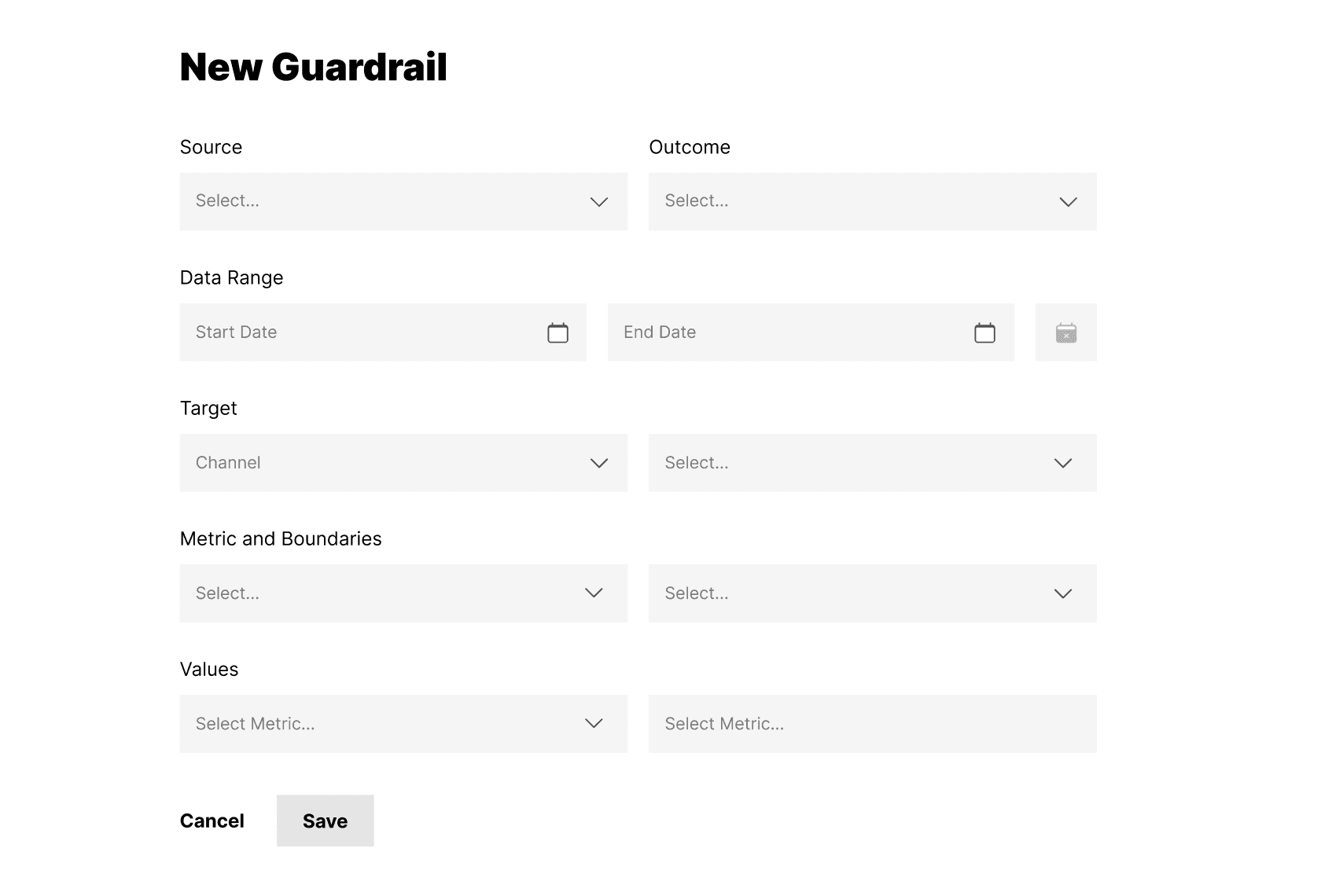
Publish your chosen scenario with explicit guardrails, CAC ceilings, conversion rate floors, and maximum reallocation percentages. When PlatformSense detects a channel drifting from its efficiency baseline, a trigger fires. Your team reruns the marketing forecasting simulation the same day. No model refresh required. No waiting until next quarter to understand what changed. The same day PlatformSense flags the drift, your team reruns the simulation.
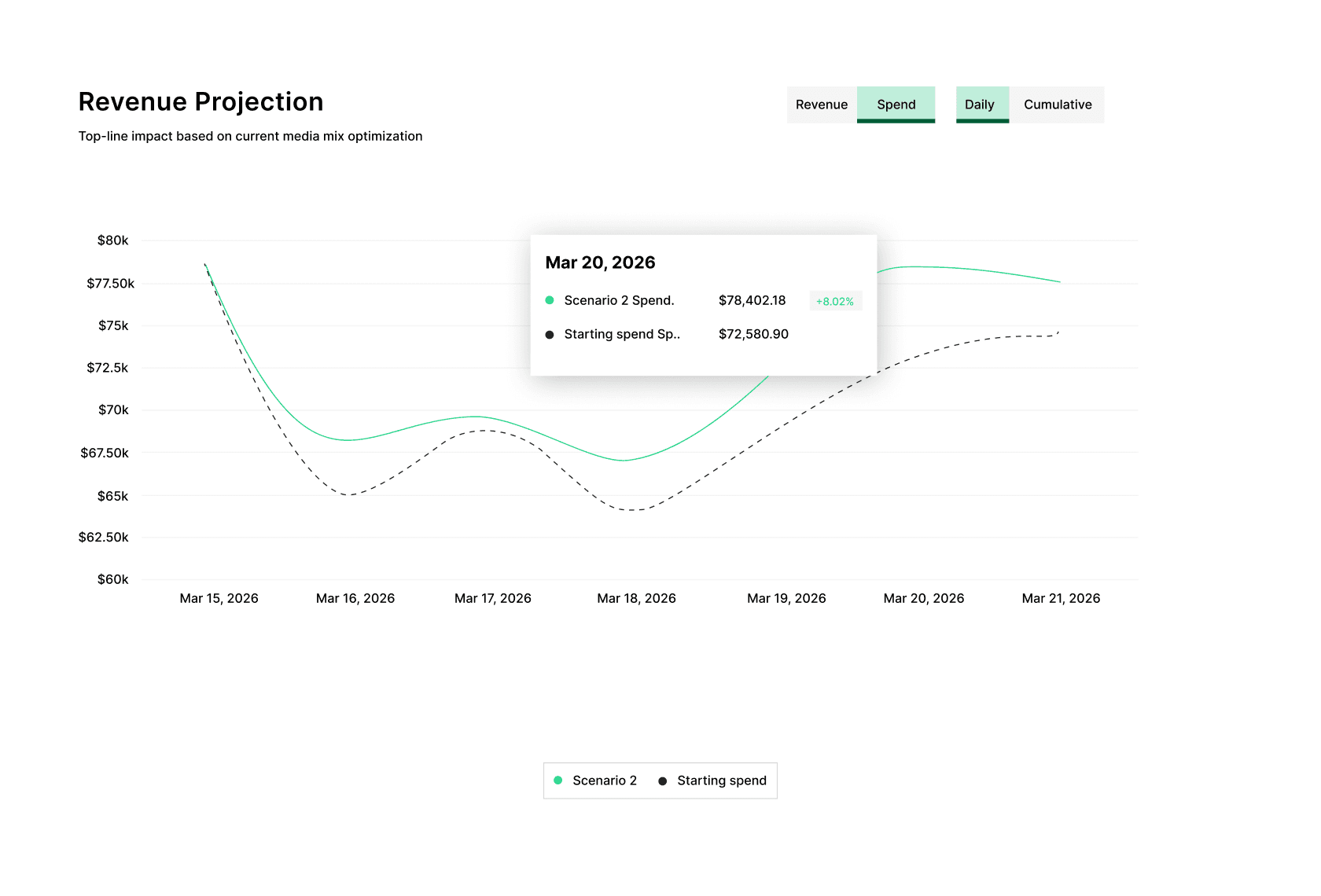
When conditions shift mid-quarter, LiftLab applies updated daily effectiveness signals from PlatformSense to your existing response curves, producing a revised, constraint-validated scenario within hours. The plan adapts. The constraints hold. The CFO doesn't get a surprise.
Minimum to start
Nice to have