Your Model Rewards Short-Term Efficiency. Your Brand Pays the Price

When long-term brand effects are invisible to your MMM, every optimization cycle quietly erodes the brand equity that drives organic growth, reduces CAC, and protects price elasticity, all while your dashboards show green.

Your Model Rewards Short-Term Efficiency. Your Brand Pays the Price

When long-term brand effects are invisible to your MMM, every optimization cycle quietly erodes the brand equity that drives organic growth, reduces CAC, and protects price elasticity, all while your dashboards show green.

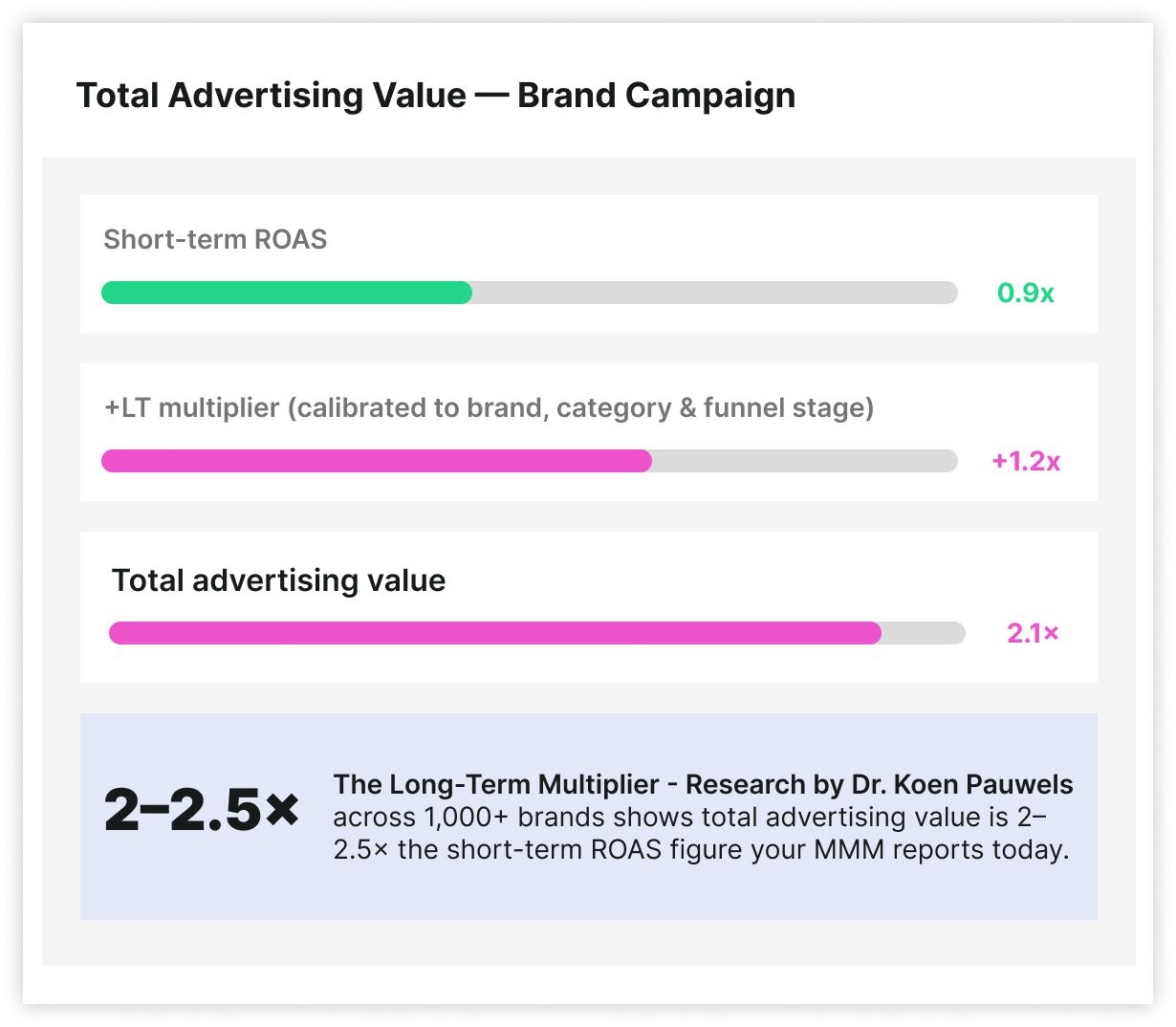
2–2.5×

Long-term vs. short-term brand advertising returns across 1,000+ brands

Dr. Koen Pauwels, Northeastern University
60–90

Days before brand effects begin surfacing in measurable revenue data

LiftLab webinar, February 2026
30+

Years of peer-reviewed marketing science research underlying LiftLab's LT multiplier framework

Dr. Koen Pauwels, Northeastern University

Standard MMMs run weekly, brand compounds quarterly

A weekly refresh cadence captures what's measurable today. But halo effects take weeks to surface and adstock carryover accumulates over months. Your model never looks far enough ahead.

Halo lift gets misattributed to performance channels

When brand advertising lifts branded search volume, your search channel claims the credit. Performance ROAS inflates. The brand looks inefficient. You cut the brand. CAC climbs. Repeat.

Finance sees brand as a cost, not a compounding asset

Without a quantified long-term return in NPV terms your CFO trusts, brand investment is always the first line item cut when revenue targets tighten.

Short-term optimization creates long-term demand decay

Over-indexing on performance channels weakens baseline demand. Conversion rates soften. Organic traffic thins. You need more paid spend to hit the same revenue, a cycle that accelerates CAC.


How LiftLab Makes Every Brand Dollar Visible on the P&L

LiftLab's Agile MMM goes beyond short-term ROAS. It explicitly models halo effects, ad-stock carryover, and long-term brand equity multipliers, then optimizes your budget against the complete picture.

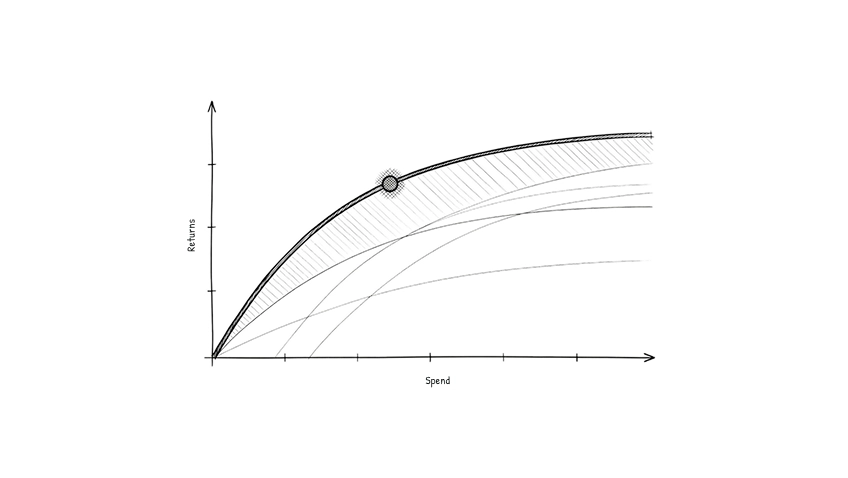
LiftLab's two-stage Agile MMM separates ad-auction dynamics (CPM/CPC costs) from true consumer response, producing accurate short-term iROAS and mROAS curves at the channel, tactic, and campaign levels.

Explore Agile MMM

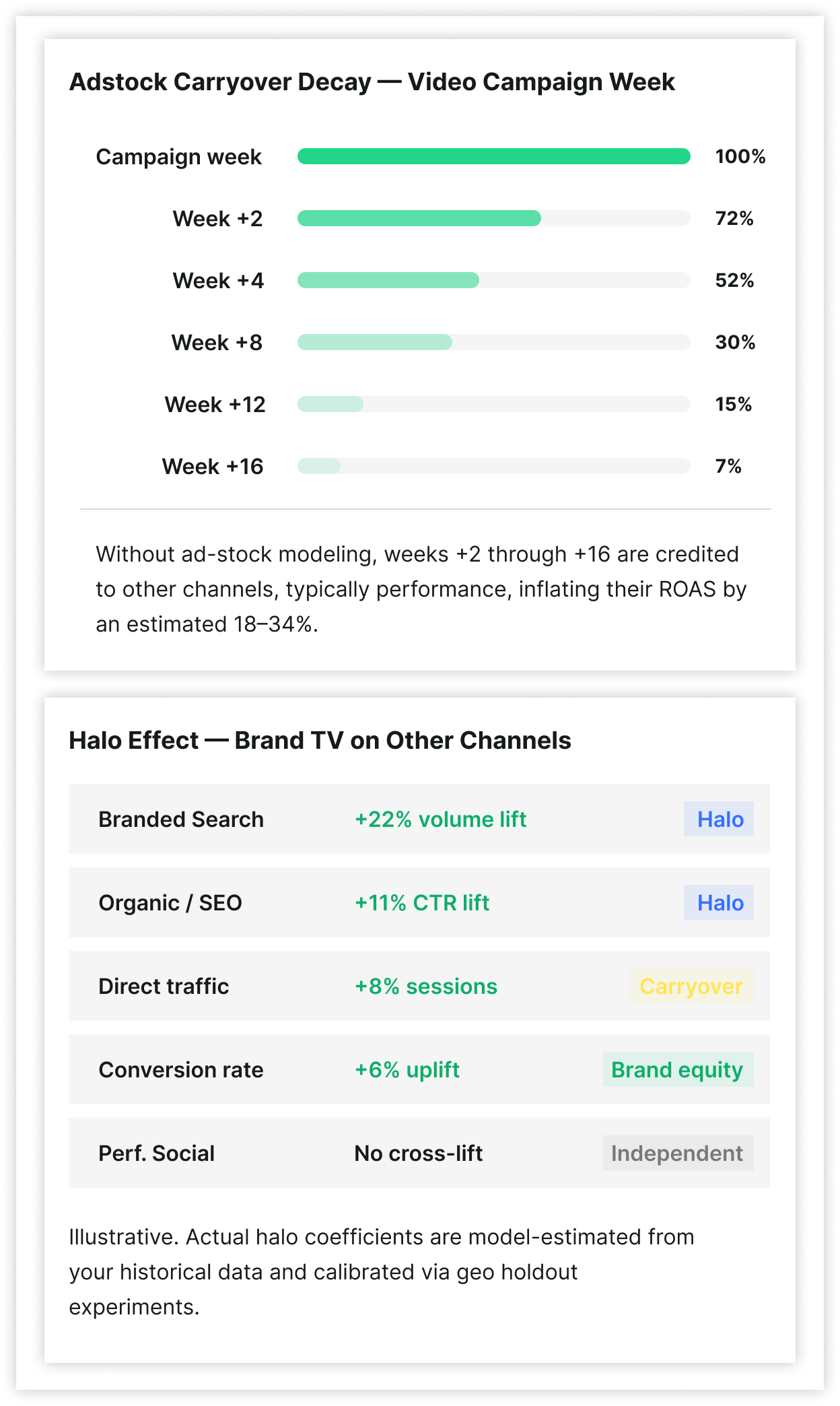
LiftLab models cross-channel halo interactions, the measurable lift brand advertising creates in branded search, organic, and direct, and estimates decay rates per channel so ad-stock carryover is properly attributed rather than stolen by performance.

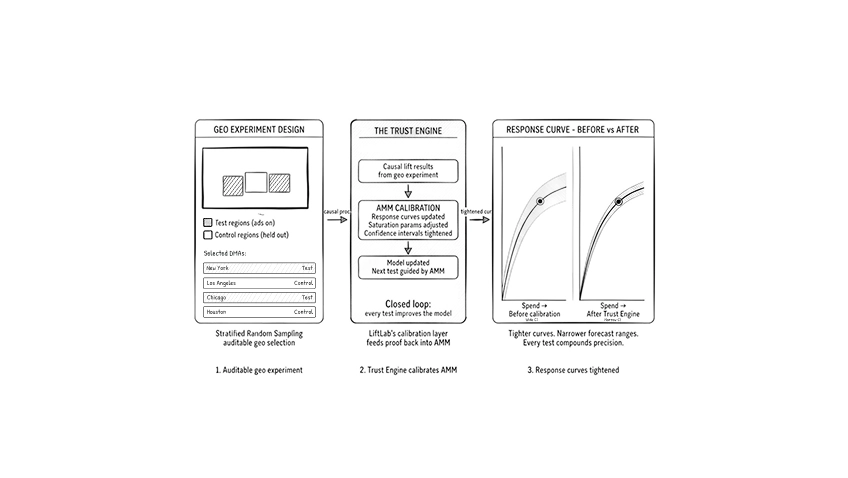
See Trust Engine calibration

Long-term advertising multipliers, calibrated to your brand lifecycle, product category, funnel position, and market context, convert brand's compounding value into a net present value figure that finance can interrogate and trust.

Learn About Incrementality Testing

Budget recommendations use total advertising value (short-term ROAS + halo lift + long-term brand equity) as the objective function, so brand and performance spend are evaluated on an equal, apples-to-apples basis for the first time.

See Scenario Planner

Measure short-term advertising effects with precision

What LiftLab Delivers When Long-Term Effects Are Modeled

Decision-grade outputs that make the brand investment case with hard econometric evidence, not survey data or gut feel.

LT Multipliers

Long-Term Advertising Multiplier by Channel

Per-channel LT multiplierPer-channel LT multipliers calibrated to your brand lifecycle, product category, and funnel stage, converting short-term ROAS into total advertising value for apples-to-apples budget comparison.

Halo Attribution

Cross-Channel Halo Attribution Map

Explicit modeling of halo lift from brand advertising into branded search, organic, and direct, recovering the mis-attributed ROAS that is currently inflating your performance channels.

Adstock Modeling

Adstock Carryover Decay Curves

Channel-specific decay rates show how long advertising effects persist, and how much carryover revenue is currently being credited to performance rather than the brand campaign that created it.

P&L Integration

Brand Equity NPV on the P&L

LiftLab models brand equity as a stock variable, expressing long-term brand contributions in net present value terms that finance teams can validate, challenge, and ultimately approve.

Portfolio Optimization

Short + Long-Term Budget Scenarios

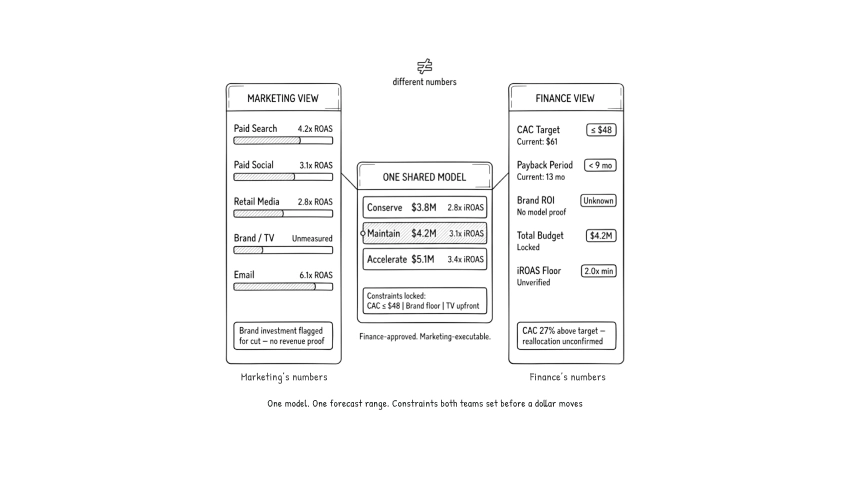
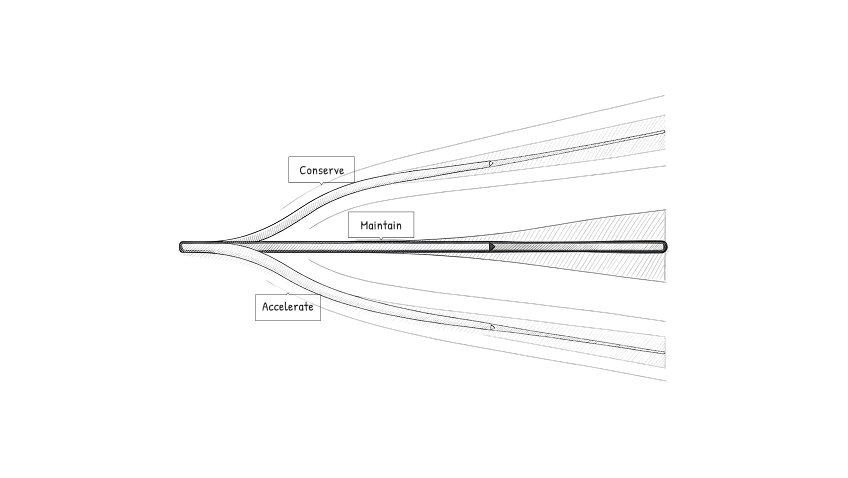
Constraint-aware scenarios that balance short-term performance ROAS against long-term brand equity compounding, showing the revenue risk of cutting brand and the equity cost of over-indexing on performance.

CFO Reporting

Board-Ready Brand Investment Narrative

One-click outputs that translate LT multipliers, halo lift, and carryover attribution into a CFO-ready financial story, so brand spend is defended with the same rigor as any capital investment.

Signs Your MMM is Missing Halo Effects and Long-Term Brand Value

Warning Signals (act now)

  • CAC keeps rising, even as ROAS holds steady; performance is masking brand decay.
  • Geo tests show brand lift, but your MMM cannot confirm or quantify it.
  • Conversion rates softened 60–90 days after a brand budget cut, and no one connected the two.
  • Finance is treating brand spend as a discretionary cost with no measurable ROI.
  • Brand advertising never appears in your MMM's top-performing channels, even though awareness scores are strong.
  • Branded search volume declines when brand campaigns pause, but your model doesn't credit the brand for the recovery.

Readiness Checklist

  • Minimum required: 12–18 months of weekly spend by channel, a primary revenue or conversion KPI, and calendar metrics for brand campaign flights.
  • Helpful additions: Branded vs. non-branded search split, organic traffic data, brand health/awareness survey scores, past geo-holdout or brand lift study results.
  • Accelerates calibration: Any existing incrementality test results, even partial, that can be used as prior inputs to the LT multiplier calibration.
  • No data science team required: LiftLab's marketing scientist handles model configuration, calibration, and interpretation.

What Happens After You Start — 4 Steps

1. Data connected; short-term ROAS and mROAS signals delivered within 48 hours.

2. Halo coefficients and ad-stock decay rates estimated from historical flight data in week one.

3. LT multipliers calibrated per channel and funnel position; brand NPV established on P&L.

4. Portfolio scenario run comparing ST-only vs. total advertising value gap surfaces immediately.

Frequently Asked Questions

Standard MMMs measure what's immediately attributable — conversions, clicks, short-term revenue lift. Brand advertising creates value over weeks and months through halo lift in branded search, ad-stock carryover, and long-term demand growth. These effects typically add 2–2.5x to the apparent short-term ROAS figure. Without explicitly modeling them, every brand budget review starts from a number that's structurally wrong.

Quantify your brand's long-term value before the next budget cycle

Book a 30-minute session with a LiftLab marketing scientist. We'll show you how halo effects, ad-stock carryover, and LT multipliers apply to your specific channel mix, and what the total advertising value gap looks like with your real numbers.

No data science team required
Live in weeks
Marketing scientist included
SOC 2 & ISO 27001 certified
Quantify your brand's long-term value before the next budget cycle