Marketing forecasting turns historical and now-casting data into an explicit answer for what to spend per channel. This matters because a report that doesn’t say what to do requires a team with time and tools most don’t have. Without deliberate spend changes to test against, models stay stuck learning from flat data, limiting forecast accuracy. This video explains how historicals, now-casting, and forecasting turn data into a specific investment decision.
Why Marketing Forecasting Has to Go Beyond a Static Report
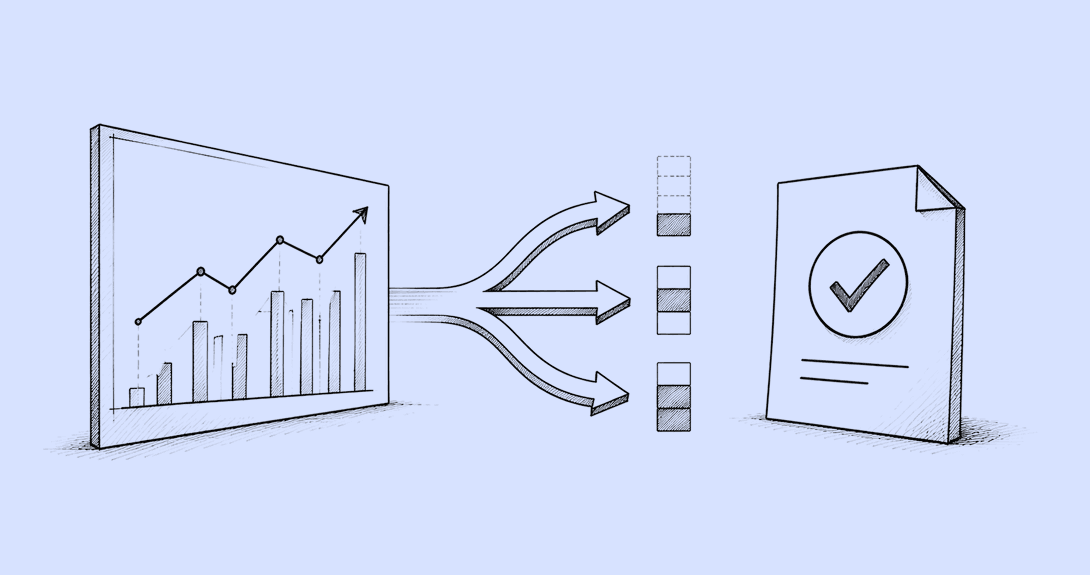
Marketing forecasting has to go beyond a static report, because a report that doesn’t say what to do next just becomes a bellwether that a team either has the bandwidth to operationalize or, more often, doesn’t. In this video, Jon Lorenzini, Chief Marketing Science Officer at LiftLab, breaks measurement into three distinct layers: historicals, what actually happened and what accounting agrees with; now-casting, what your models infer is happening right now based on that history; and forecasting, the layer that actually says what you should do next.
Lorenzini describes LiftLab’s forecasting tool as explicit by design: it tells you to spend a specific amount on a specific channel for a specific period, backed by the underlying experiments and marketing mix model computing the recommendation. He’s candid that clients respond to that guidance differently, some prefer a stepwise approach and watch topline revenue as they go, others go all-in immediately, but either path actually improves the model over time, since deliberate spend changes generate the kind of varied data a model can learn from in a way flat, unchanging spend never will. In his view, the biggest long-term risk isn’t making a bold bet, it’s staying static.
In this video, you’ll learn:
The critical difference between static reporting and active forecasting
How to categorize analytics into historical data, now-casting, and future forecasting
Why providing explicit, channel-specific investment advice is vital for team actionability
The importance of taking calculated risks to improve model precision
How data-driven changes contribute to fundamental business transformation
TIME STAMPFull Video Transcript: Marketing Forecasting From Report to Action Explained
+–
In this video, LiftLab’s Jon Lorenzini explains the difference between historicals, now-casting, and forecasting, and why forecasting has to end in an explicit investment decision.
[0:00 – 0:36] The Problem with Traditional Analytics Reporting
The problem with analytics companies, any sort of reporting tool, is that they hand the report and then they ask the client to make sense of it and operationalize it in business. And I think that’s a real challenge, because if you get a report and it doesn’t tell you explicitly what to do, you’re basically saying, “figure it out.” And because of that, if they don’t have the process to receive that, if they don’t have either the bandwidth of a team or the tools to ingest it, or anything along those lines, really it’s just a nice to have and doesn’t change your business. It’s just like a bellwether.
[0:37 – 1:16] Defining Historicals, Now-casting, and Forecasting
The way that I like to split things out is, you have your historicals, and that’s your analytics, that’s what happened. You know the accounting team agrees with it; you know you spent this, you got this back, that’s your historicals. Then you have your now-casting, which is what models pretty much are; they say, based off of all those historicals, what’s happening now from the ROI, how can we infer that. So historicals, now-casting, and then there’s forecasting, which is what should you do, and that’s really what the decisioning piece of it is, where we want to not just hand you a report and say figure it out, but we want to give you, based off of this report, this is what you should do with your business.
[1:17 – 1:45] Actionable Forecasting with LiftLab
That’s the underlying piece of the forecasting tool: is saying, given what has happened, what should you do? And with what you should do, we are very explicit: you should spend this much on this channel for this long, or for this time period, you should spend that on that channel, and that’s something that anyone in an organization can understand. It’s backed by all that information, the data that we have. It’s computed with the LiftLab engine, with the experiments and market mix model.
[1:46 – 2:38] Risk Management and Model Refinement
But then for the future-looking stuff, we want to make it as explicit, you could agree or disagree. We have some clients who will say that’s a big shift, let’s go ahead and do stepwise little pieces to get there, and if we see our topline revenue growing, great. And then there are other people who are like, “let’s just swing it all the way up to the max,” and we see results suddenly with them. And what’s cool about that is, by creating those changes, you’re actually improving your historical information, because you’re making those swings. So the biggest risk over a long time horizon is not taking any risks, because you still have that flat, even spend. If you’re changing, we get more observations at a higher level or a lower level if you’re changing up or changing down, which also improves your model. So the forecasting is the actionability, change management piece that allows those changes to be made confidently, which makes the data better, makes everything more accurate, and only helps you in the longer term.
[2:39 – 3:01] Driving Business Transformation
I think that the forecasting tool and the model enablement that we’re doing here will improve all the other pieces of our business, because it’s making advertisers change their investments, which changes their business, as opposed to, “yeah, that looks about right, I got this report, this is good, I think I’m doing a good job, I’m going to just keep doing that job.”
Key Lessons: Turning Marketing Forecasting Into Explicit Investment Decisions
Operationalizing analytics: Moving beyond basic reporting to provide clear, actionable steps ensures that data actually influences business decisions.
The forecasting framework: Distinguishing between what happened (historicals), what is occurring (now-casting), and what should be done (forecasting) creates a comprehensive strategy.
Strategic risk-taking: Making intentional shifts in marketing spend generates valuable data observations that significantly enhance the accuracy of future predictive models.
Change management: Empowering teams with precise, data-backed directives fosters a culture of confident decision-making and continuous improvement.