Last-click reporting unfairly penalizes upper-funnel platforms like Facebook, crediting only the final touchpoint. This matters because even Facebook has acknowledged the problem, building tools like conversion lift testing and the Robin MMM to measure impact. Without a cross-channel view, those tools still fall short, since results are locked to Facebook and Robin takes real technical work. This video explains why advertisers need one comprehensive way to optimize spend every week.
Why Last-Click Reporting Penalizes Facebook, and Why Even Facebook Agrees
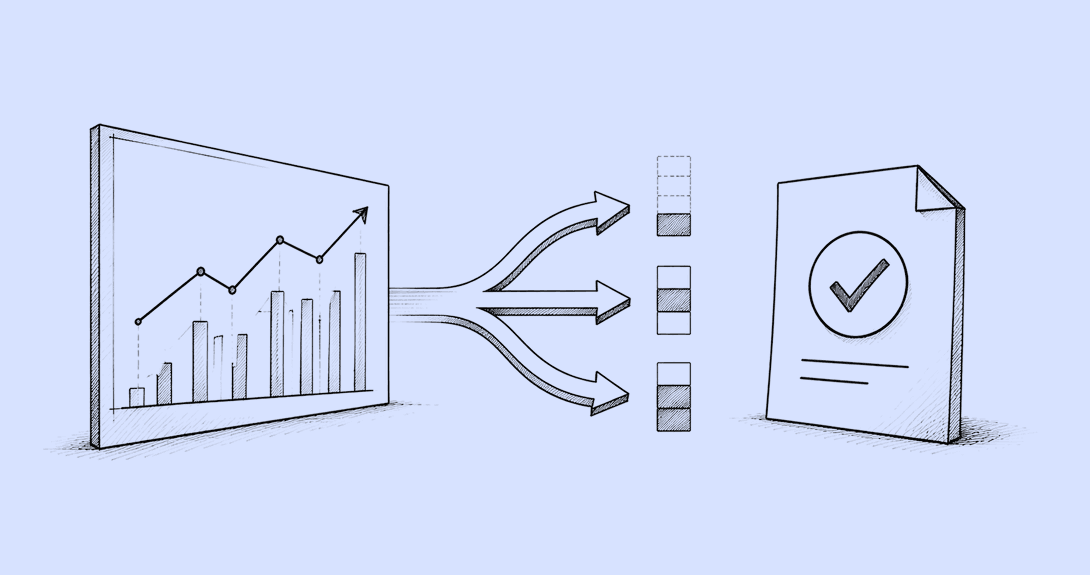
Last-click reporting penalizes Facebook, and Facebook itself agrees, because so much of its ad inventory is upper-funnel by nature, and a last-touch model structurally can’t give credit for that kind of exposure. In this video, John Wallace, CEO of LiftLab, points out that Facebook’s push against last-click reporting is genuinely in advertisers’ interest too, even though it’s also self-serving for the platform. In response, Facebook has built its own online conversion lift test, a well-documented, widely used tool for quantifying incremental effects, and open-sourced an MMM called Robin.
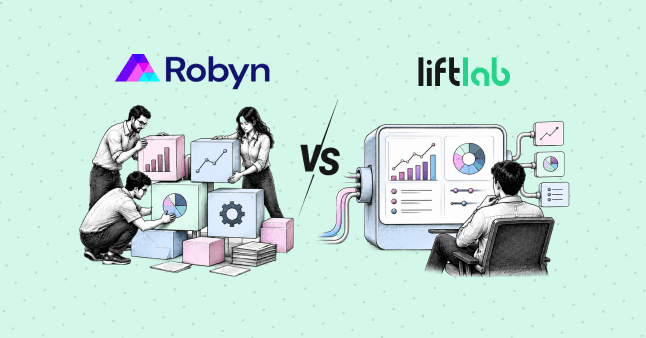
Both come with real limits. The conversion lift test’s methodology is Facebook-specific, so results can’t be replicated on any other platform. Robin is easy to install, but standing up a usable model means consolidating all your own data and getting up to speed on how to build marketing mix models, which is a serious undertaking on its own. Wallace credits Facebook for recognizing the problem and doing something about it, but notes that most advertisers who try these tools eventually reach the same conclusion: neither one tells you what to do across every channel on a Monday morning.
In this video, you’ll learn:
Why last-click reporting is detrimental for both Facebook and advertisers
The limitations of platform-specific conversion lift experiments
The operational challenges associated with using open-source tools like Robin
Why a more comprehensive, integrated approach is necessary for marketing effectiveness
TIME STAMPFull Video Transcript: Last-Click Reporting and Facebook’s Attribution Tools Explained
+–
In this video, John Wallace explains why last-click reporting penalizes Facebook specifically, and where the platform’s own fixes still fall short.
[0:00 – 0:19] The Problem with Last-Click Reporting
It is a well-known fact that Facebook would advise you to move away from last-click reporting, and I have to agree with them. It is in their interest for you to do that, but it is also in your own interest. Why is it in Facebook’s interest? A lot of their media is upper-funnel by nature, and so any kind of last-click reporting attribution is going to penalize it.
[0:20 – 0:47] Facebook’s Response to Attribution Challenges
What have they done about it at Facebook? They have done a few things. They have put out an online conversion lift test, so you can use their experiments, their automated experiments, to try to quantify incremental effects. It is a well-known and well-documented tool everyone has tried. Where it falls short is their methodology is very Facebook specific, so you are never going to be able to repeat that test in another platform. It is going to be Facebook specific outcomes and Facebook specific methodology.
[0:48 – 1:27] Challenges with Open-Source Modeling
They have also put some effort behind an open-source MMM called Robin. Like any open-source tool, these things are very easy to download and install, but a few hours later you start to hit the reality of, I need to get all of my data in one place and I need to come up to speed on how to build these models. Insourcing an MMM is something that is almost a topic for another day. Hats off to Facebook for recognizing that last-click does not benefit them, and it also does not benefit any advertiser. It is great that they have done something about it, and once you have tried these things out you are probably going to come to the same conclusion as many other advertisers, that it does not tell you what to do on every channel every Monday morning.
Key Lessons: Why Last-Click Reporting Tools Still Fall Short
The flaw in last-click attribution: Relying on last-click data incorrectly credits only the final touchpoint, which ignores the crucial role of upper-funnel media in driving customer awareness and interest.
Limitations of internal tools: While Facebook’s conversion lift tools offer better measurement than last-click, they are siloed and cannot easily be replicated across other marketing channels or platforms.
Complexity of open-source solutions: Tools like Robin are technically accessible but require significant resources for data consolidation and model building, making them difficult for many organizations to implement successfully.
The need for a comprehensive strategy: After experimenting with proprietary or open-source tools, many advertisers discover the need for a single, integrated platform that offers real cross-channel optimization guidance every week.