The biggest limitation of last-click attribution is treating marketing as zero-sum, crediting one channel when several worked together. This happens because last-click reporting is a counting system, so cutting bottom-funnel spend can lift top-funnel numbers without real growth. Without a way to test synergy, marketers can’t tell if combining channels grows revenue or just shifts credit between reports. This video explains how cross-channel experiments answer what last-click never can.
Why the Limitations of Last-Click Attribution Hide Channel Synergy
The limitations of last-click attribution hide channel synergy because a zero-sum counting system can only credit one channel per conversion, so it has no way to detect when two channels are actually working better together than either could alone. In this video, John Wallace, CEO of LiftLab, targets a specific, common question marketers ask of their Google Analytics reports: what’s the relationship between top-of-funnel and bottom-of-funnel performance? Intuition tells marketers that cutting bottom-funnel spend will make top-funnel numbers rise, and that’s exactly what a zero-sum, last-click system is built to show, a substitution effect, not a real answer.
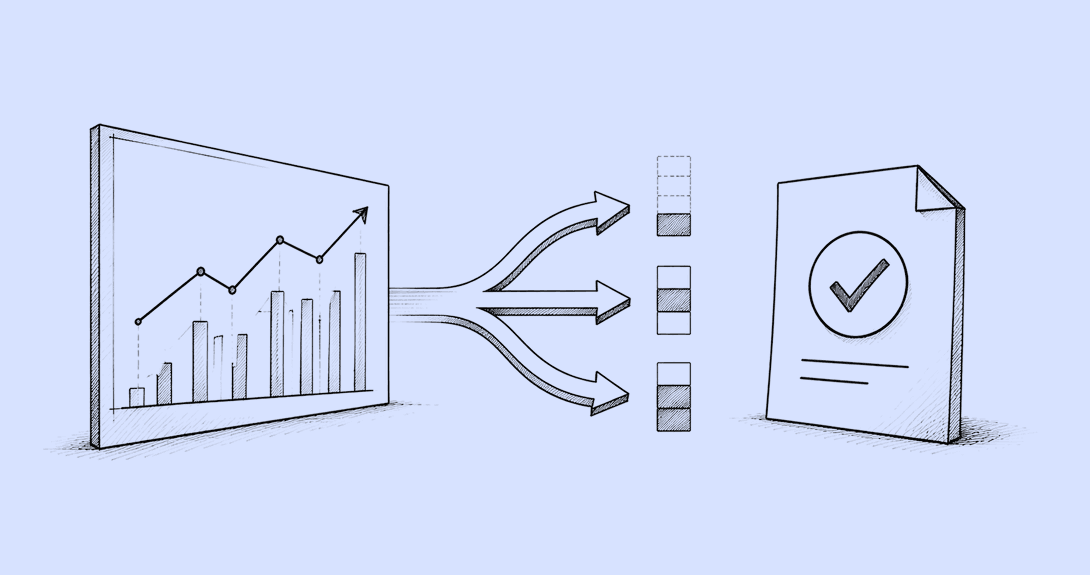
Wallace uses a water balloon as the analogy: squeeze one side and the other side visibly grows, but that tells you nothing about whether the balloon itself, the total revenue, actually got bigger. Last-click reporting simply is not built to answer that question. The fix Wallace proposes is a cross-channel experiment: expose one group to only top-of-funnel, another to only bottom-of-funnel, and a third to both, then measure whether the combined effect is meaningfully greater than the sum of the two parts, or honestly report back if it isn’t.
In this video, you’ll learn:
Why standard last-click analytics cannot reveal true marketing performance
The nature of the substitution effect in funnel-based spend
The limitations of zero-sum counting algorithms in modern attribution
How to design scientific experiments to measure real channel synergy
TIME STAMPFull Video Transcript: The Limitations of Last-Click Attribution Explained
+–
In this video, LiftLab CEO John Wallace explains why last-click attribution can’t measure channel synergy, and how cross-channel experiments fill that gap.
[0:00 – 0:20] The Myth of Last-Click Reporting
There is a myth that is sometimes perpetuated by last-click reporting, and it is such a common dialogue that I hear amongst marketers. It really is them reading the tea leaves of their Google Analytics reports and asking themselves questions that they probably will never be able to answer by looking at these kind of numbers. The numbers themselves are not set up to answer hard questions.
[0:20 – 0:43] The Zero-Sum Game of Funnel Attribution
One of my favorites is what is the relationship between top-of-funnel reporting and bottom-of-funnel reporting. I think people know this in their intuition. They will recognize if I cut my bottom-of-funnel spend, my top-of-funnel reporting and revenue will increase. There is a substitution effect, and that is coming from the fact that it is a zero-sum game in that type of counting algorithm where we are only going to give credit to one thing.
[0:43 – 1:05] Synergy Between Funnel Stages
The real question that we are trying to get to the bottom of, the question that is in our heart, is: is there a synergy between the top-of-funnel and the bottom-of-funnel when we have both present? Are they working together in a way that they cannot do by themselves? You will never answer that question looking at a zero-sum or a last-click based reporting system. It is not capable of answering that question.
[1:05 – 1:29] The Water Balloon Analogy
It is kind of like the analogy here might be, I am going to squeeze on a water balloon. We know that there is going to be something that comes out on one side and something that comes out on the other side. If I squeeze more to the left, more of the balloon will come out to the right. That is by definition what is going to happen. But the question that we are trying to answer here is if I squeeze on the balloon, will the balloon get bigger? We are trying to say will I increase my revenue by spending on these two tactics? You are just not set up to answer that question.
[1:29 – 2:13] Using Cross-Channel Experiments
Looking at a last-click reporting system, I would look to a different place. I would actually say where could science help answer this question? I would encourage you to run what I would call a cross-channel experiment. In a setup like this, you are going to expose one group of people to only the top-of-funnel, you are going to expose another group of people to only the bottom-of-funnel, and a third group of people to both. You are going to observe what happened, and you need the analytical methods to analyze this type of data. What we should be able to establish is to what degree is one plus one equal to something greater than two, or if it is not, if it is close to two, we need to have that honest dialogue as well. Again, you will not get to something that is small and nuanced like that by looking at the wrong accounting.
Key Lessons: Measuring Channel Synergy Beyond Last-Click Attribution
The reporting myth: Standard reporting tools are not designed to answer complex questions about how different marketing tactics work together and often mislead marketers by suggesting a false relationship between funnel stages.
The water balloon analogy: Simply moving budget between TOFU and BOFU often just shifts reporting numbers without actually growing total revenue. The focus should be on whether the overall balloon gets bigger.
Scientific testing: To understand true effectiveness, marketers should run cross-channel experiments which involves testing groups exposed to TOFU alone, BOFU alone, and both simultaneously.