Budget fluidity means a team can move spend the moment evidence shows where it works harder. This matters because constant experimentation is wasted if the organization can’t shift budget fast enough to act on what it finds. Without that fluidity, brands leave upper-funnel opportunities unfunded and keep paying for saturated channels. This video explains how pairing experimentation with budget fluidity creates a repeatable cycle of scaling what works.
Why Budget Fluidity Is the Second Half of a Winning Experimentation Strategy
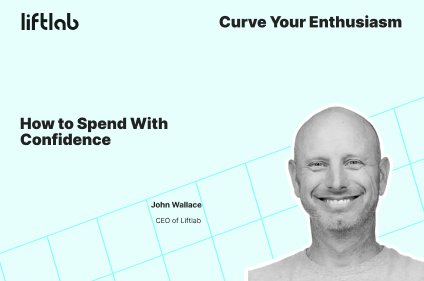
Budget fluidity is the second half of a winning experimentation strategy, because finding a profitable opportunity through testing means nothing if the organization can’t actually move money toward it. In this video, John Wallace, CEO of LiftLab, shares the answer he gives customers and prospects who ask how to get the most out of LiftLab. The first pillar is a tinkerer mindset: an appetite for evidence-based learning and a real test-and-learn agenda, built on the existing evergreen spend already sitting in a media plan, which is fertile ground for experiments without needing to invent new ones.
The second, equally important pillar is budget fluidity itself. An insight is worthless if teams can’t move spend in response to it, and Wallace points to LiftLab’s SKIMS case study as an example: the brand found a profitable opportunity to spend higher up the funnel that contradicted what traditional metrics had shown, and had the confidence to act on it. Wallace notes that ROI shows up from two directions once this cycle is running, from direct experiments that reveal either room to scale or a saturated channel worth dialing back, and from the marketing mix model itself, which starts producing weekly trade opportunities within about three weeks of a brand becoming data-ready.
In this video, you’ll learn:
How to adopt a data-driven “tinkerer” approach to marketing experiments
The vital importance of maintaining budget fluidity for strategic agility
How to gain the confidence to invest in upper-funnel tactics
Ways to identify saturated spend and reallocate for better profitability
How marketing mix models provide recurring, actionable signals for optimization
TIME STAMPFull Video Transcript: Budget Fluidity and the Tinkerer Mindset Explained
+–
In this video, LiftLab CEO John Wallace explains the two pillars he sees behind brands that get the most out of LiftLab: a tinkerer mindset and budget fluidity.
[0:00 – 0:54] The Tinkerer Mindset
I’m sometimes asked by executives of our customers or prospects, and I’m always endeared to hear these questions, like, how do we get the most out of LiftLab? What do we need to do? A few things that I’ve come across, if I look across best practices, is a willingness, or I like to call it a tinkerer mindset. It’s a willingness to not have your head in the sand, to not want to kind of lean on the playbook that you’ve used. You’re willing to disrupt that, and it really comes, if I expand on tinkerer, it’s really an appetite to use evidence-based learning. Right? To lay out a test-and-learn agenda and a series of experiments that you want to run. You don’t have to think too hard in LiftLab about where those experiments come from; you already have an entire media plan with a whole bunch of evergreen spend, and that’s the exact fertile ground to start testing. So that tinkerer mindset really pays off.
[0:55 – 1:41] Budget Fluidity and Confidence
The next, equally important, is budget fluidity. If you find an opportunity to spend more, but then the teams aren’t able to move their spend around, it defeats the purpose. So it’s maybe stating the obvious, but it’s high on the list to know that there needs to be budget fluidity. And then, related to that, is having the confidence to invest in upper funnel when the evidence is presented to you. There’s case studies on our website, like the one from SKIMS, where that brand was able to see an opportunity to spend profitably higher up the funnel. It was new metrics; it kind of contradicted what they’d seen traditionally. They were able to have the confidence to trade on those insights to capture that profitability, and they were even willing to share it with other LiftLab customers.
[1:42 – 2:25] Realizing ROI and Optimization
People start working with LiftLab and start to feel ROI fairly quickly, because they’re getting it from multiple sources. It doesn’t mean the very first experiment that you run will be a home run. You could get the result that the spend that you’re deployed is actually fairly profitable at the current spend level, so you could get a confirmation of what you’re doing. But more likely, you’re going to see from an experiment that you’re either one, leaving money on the table, that there’s an opportunity to scale, or two, a portion of your spend is saturated, that there’s an opportunity to dial back your spend and not give up that much revenue or profitability in the process. And when you dial that back, you’re freeing it up to spend somewhere else more profitably. So that’s the kind of virtuous cycle that brands are experiencing.
[2:26 – 2:47] Marketing Mix Modeling Signals
The other set of signals are not from experiments; they’re from the mix model. The mix model is up and running within three weeks from when brands are data-ready, and it’s running every week, and they’re presented with opportunities to trade on a weekly basis. That’s why there’s multiple ways to feel an ROI opportunity, again, if the budget fluidity is there and you’re able to capitalize on these suggestions. That’s the virtuous cycle that brands are after.
Key Lessons: Pairing Experimentation With Budget Fluidity
Mindset: Cultivate a culture that favors evidence-based experimentation over static playbooks to uncover hidden growth opportunities.
Operations: Ensure your teams have the flexibility to move budget fluidly across channels when performance data indicates a higher potential for impact.
Strategy: Use insights from marketing mix modeling to make confident decisions, even when results challenge traditional assumptions about funnel performance.
Cycle: Implement a consistent testing agenda to create a virtuous cycle where you are constantly scaling profitable spend and eliminating inefficiencies.