AI in marketing analytics works best as an assistant, not a replacement for human judgment. This matters because AI models can hallucinate or produce invalid results, and skipping oversight risks building strategy on untrue data. Without deep understanding of the business question, automated tools can generate confident answers no one can actually validate. This video explains why experimentation and human interpretation still matter more than automation in marketing measurement.
Why AI in Marketing Analytics Needs Human Oversight, Not Just Automation
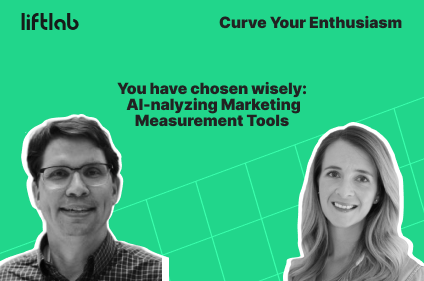
AI in marketing analytics needs human oversight, not just automation, because a tool that can generate a confident-looking answer isn’t the same as a tool that understands the actual business question behind it. In this Curve Your Enthusiasm episode, Jon Lorenzini talks with Moe Kiss and Tim Wilson of the Analytics Power Hour about how measurement has evolved well past simple attribution, and where AI genuinely helps versus where it introduces new risk.
Kiss shares how Canva’s own measurement journey moved from basic attribution toward a full suite including marketing mix modeling and experimentation, and that the hardest part of that shift was never technical, it was managing stakeholders and re-educating marketing leaders on why the more complex approach was actually worth the added effort. Wilson adds historical context: the industry spent two decades assuming more data meant more truth, when in reality it grew up without a solid grounding in statistics or econometrics, leaving many attribution models that offered false certainty while ignoring incrementality entirely. Both agree that AI tools are genuinely useful for synthesizing data and automating routine reporting, but only when paired with real human interpretation and a willingness to keep re-educating stakeholders who are still carrying outdated assumptions from earlier in their careers.
In this video, you’ll learn:
The evolution of marketing measurement from basic attribution to advanced modeling
Why complex measurement strategies require significant stakeholder management and education
The limitations of relying solely on automated AI tools for marketing decisions
How experimentation serves as a powerful method for validating marketing performance
The critical distinction between analytics as passive accounting versus marketing science as active experimentation
TIME STAMPVideo Overview: AI in Marketing Analytics Summarized
+–
[0:00 – 1:26] Introduction to the Episode
Jon “JLo” Lorenzini introduces the Curve Your Enthusiasm podcast and welcomes guests Moe Kiss and Tim Wilson from the Analytics Power Hour. The episode focuses on discussing marketing measurement tools, the impact of artificial intelligence, and the balance between academic theory and practitioner reality.
[1:26 – 5:21] Evolution and Stakeholder Management
Moe discusses the journey of marketing measurement at Canva, moving from basic attribution models to a comprehensive suite including agile marketing mix modeling and experimentation. She highlights that the greatest challenge was not technical, but rather the process of managing stakeholders and educating new marketing leaders on why more complex measurement models offer greater value than the simplified systems they used previously.
[5:21 – 8:22] Correcting Digital Marketing Philosophies
Tim reflects on the history of digital marketing over the last 20 years, noting that the industry mistakenly believed that having more data meant knowing the truth. He and Moe agree that the industry grew up without a strong foundation in statistics or econometrics, leading to a reliance on flawed attribution models that provided a false sense of certainty and ignored concepts like incrementality. They emphasize the need to re-educate stakeholders who have ingrained misconceptions from their past careers.
Key Lessons: Using AI in Marketing Analytics Responsibly
Stakeholder alignment: Leaders must invest time in educating teams on why complex measurement frameworks provide more value than outdated, simplified models.
Data limitations: Having more data does not equate to knowing the truth, as industry growth often occurred without foundational statistical rigor.
Human judgment: Analytics should be viewed as a tool for support, not a replacement for creative marketing thought and unique business strategy.
Experimentation value: Running controlled tests is essential to replace assumptions with genuine insights into what drives actual customer behavior and incremental growth.