


Find out how a Google branded search experiment uncovered nearly $14,000 wasted daily ad spend, while growing profitability
An international SaaS company cut Google brand search spend 87% while orders fell just 2% and profit rose 3.5%. A geo-based experiment tested three spend levels against a diminishing returns curve, revealing that most of the campaign’s budget wasn’t driving incremental orders once impression share passed 85-90%. Full results are detailed in the case study below.
Business Challenge
An international SaaS company was spending heavily on its Google brand search campaign to drive new customer acquisition but had no way to know whether that spend was actually working. With ad impression share already sitting at 85-90%, the real question wasn’t whether the campaign could reach more people, it was whether the budget behind it was still earning its keep, or whether most of it was going toward customers who would have converted regardless.
Objectives
Determine whether the brand search campaign was overspending, and if so, by how much
Find the spend level that would maximize profit, not just maintain order volume
Make a data-backed budget decision instead of guessing at the right number
How LiftLab’s Agile MMM Platform Approached It
Effective SaaS marketing measurement requires data-backed answer to a budget question, not a guess. LiftLab leveraged its incrementality testing suite and ran a geo-based experiment.
Three spend levels tested: Regular spending, spending down, and spending double down, run as a live geo-based experiment rather than a hypothetical one.
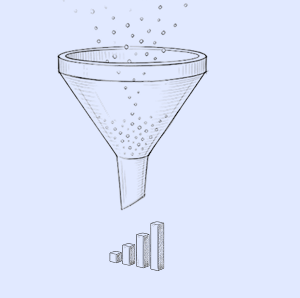
A diminishing returns curve: Built from the results of the experiments to show exactly where additional spend stopped paying off, at a daily spend of $2,108
Impression share as the starting signal: With reach already at 85-90%, the test was designed to answer “by how much,” not “whether,” the campaign was overspending
A direct current-vs-suggested comparison: Ad spend, orders, cost per click, and profit compared side by side, so the tradeoff was visible in a single view
For full details on how the geo-test design and the diminishing returns curve was built, you can find a downloadable case study at the bottom of this page.
Results & Business Impact
Ad spend dropped by 87%, while order volume remained nearly stable falling just 2%
Cost per click improved by 47.6%, dropping from $0.21 to $0.11
Profit rose by 3.5%, confirming the cut in spend didn’t cost the company any meaningful growth
The key takeaway wasn’t just that the campaign was overspending, it was by how much: nearly $14,000 a day in Google brand search spend was going toward orders the company would have gotten anyway. The experiment for Google branded search optimization gave the team a clear, evidence-based answer to a question they were only able to guess before.
Key Takeaways
High impression share is a warning sign. Once a channel is already reaching nearly everyone available, more spend usually buys diminishing returns and not more customers.
Branded search is one of the easiest channels to overspend on because so many of its conversions would have happened without running any ad at all.
A diminishing returns curve turns “are we overspending” into “by how much,” which is a much easier conversation to act on.
Cutting spend and growing profit aren’t in conflict, when the spend being cut wasn’t driving incremental results in the first place.
Want a detailed look at how LiftLab ran this Google branded search experiment, from spend-level testing to the resulting diminishing returns curve?
Google Branded Search Experiments & Google Ads Incrementality Testing
What results did the SaaS company achieve with LiftLab?
The company cut Google brand search spend 87%, from $16,156 to $2,108 a day, while orders fell just by 2% and profit rose 3.5%. Cost per click also improved 47.6%. The reduction was based on a diminishing returns curve showing that spend beyond $2,108 a day was no longer generating meaningful incremental orders.
What marketing challenge was this SaaS company facing?
The company was spending heavily on Google brand search with ad impression share already at 85-90%, but had no reliable way to know whether that spend was actually driving new customers or simply capturing demand that already existed. Before committing to a budget change in either direction, the team needed a credible way to test exactly how much of the spend was working.
What is a Google branded search experiment and how does it work?
A Google branded search experiment tests different spend levels against real, measured outcomes rather than assumptions. In this case, LiftLab ran a geo-based test comparing regular spending, reduced spending, and doubled spending, then built a diminishing returns curve from the results to show the exact point where additional spend stopped generating meaningful additional orders.
How does branded search incrementality testing differ from looking at conversion rates alone?
Branded search incrementality testing measures whether ad spend is actually causing conversions, rather than just capturing customers who searched the brand name and would have converted anyway. Conversion rates alone can look strong even when a campaign is overspending, because they don’t distinguish between incremental orders and orders that would have happened without any ad spend at all.
Can LiftLab help my brand find the right level of branded search spend?
Yes. LiftLab’s <a href=”https://liftlab.com/platform/agile-marketing-mix-modeling/”>Agile MMM Platform </a>is built to answer exactly this question for brands with high impression share on branded terms, where overspending is common and easy to miss. If your team needs a credible, data-backed answer for branded search ad spend optimization, request a demo to see how LiftLab’s Incrementality Testing Suite and experiments work.