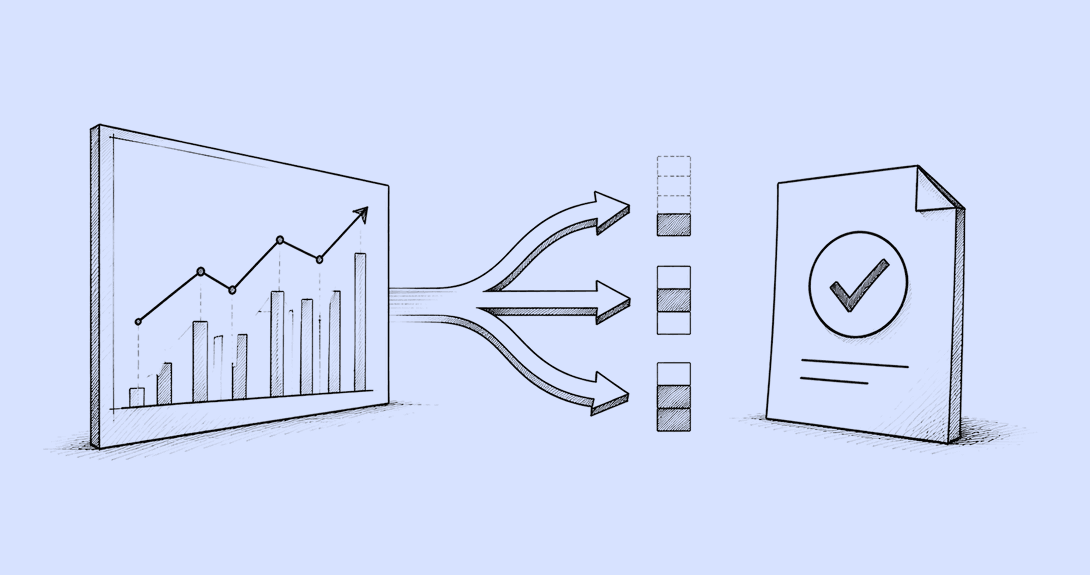

Growth and profitability aren’t opposing goals; the balance shifts with a firm’s cycle and capital access. This matters because a new channel often looks profitable early, but no platform scales infinitely or warns you when returns turn negative. Without tracking that shift, marketers fund channels past the point where spend hurts profitability instead of growth. This video explains how agile mix modeling and experimentation reveal where that point is.
The Trade-offs Between Growth and Profitability Across a Firm’s Cycle
Growth and profitability shift together across a firm’s cycle, because the right balance between them depends on time horizon and capital access, not a fixed rule. In this video, John Wallace, CEO of LiftLab, explains that a firm with access to outside capital may run in high-growth mode for a period, effectively buying market share, but the goal should still be buying the most profitable growth available, not just the most volume. Priorities can shift mid-quarter too: a firm optimizing profit early on may pivot toward growth if it looks like it will miss a number investors are watching, and neither goal cancels the other out.
The risk sits with new marketing channels specifically. Early money into a new channel often looks highly profitable, but no platform scales without limit, and none of them will call to say spend has crossed into negative profitability territory. That responsibility falls on the marketer, using tools built to speak the language of diminishing returns, like an agile marketing mix model paired with paid media experimentation, to find the point where growth is still coming in but at a cost to profitability.
In this video, you’ll learn:
How companies balance the need for high-growth market share with the necessity of maintaining profitability
Why business goals often shift during a fiscal quarter based on capital availability and investor demands
The dangers of assuming marketing platforms scale infinitely without oversight
How modern analytical tools can help identify the precise point where additional spending begins to negatively impact overall profitability
The methodology of using agile marketing mix modeling and experimentation to understand the language of diminishing returns
TIME STAMPFull Video Transcript: Balancing Growth and Profitability Explained
+–
In this video, LiftLab CEO John Wallace explains how growth and profitability trade off across a firm’s cycle, and how to catch diminishing returns before they hurt margin.
[0:00 – 0:18] The Challenge of Balancing Growth and Profitability
Let us talk a little bit about the trade offs of growth and profitability. Marketers are often tasked to drive efficient growth. It does reflect a little bit on where the firm is in its cycle and what the time horizon is that we are talking about. It is clear that over short periods of time, especially if you have access to outside capital, you may be in a high growth mode; you are essentially buying market share.
[0:19 – 0:46] Strategic Shifts in Business Objectives
But when you are doing that, you want to do it in the most profitable way possible. We do not want to buy the least profitable growth; we want to buy the most profitable growth. And there could be other periods of the firm where you really are optimizing for profit, and then we have even seen it for a firm that, in the beginning of the quarter, they may be thinking a lot about profit, but they realize somewhere in the middle of the quarter that they might miss a number that an investor is looking for, and they will want to double down on growth again. So these things change, and again, they are not mutually exclusive and they are not zero sum.
[0:47 – 1:13] Managing Diminishing Returns in Marketing Channels
Especially when you are working with new marketing channels, at the very beginning, when you are putting new money into a marketing channel, there might be really a nice, attractive amount of growth, and it may be highly profitable. What you should have your guard against is that at some point these platforms do not scale infinitely, and they are never going to call you up and tell you that you should stop spending on us. So it does fall on the marketer to figure out at what point they are still going to get the revenue, but at a point that the impact on profitability becomes negative.
[1:14 – 1:32] Leveraging Data to Optimize Performance
LiftLab is a system to understand the trade offs of growth and profitability, and our particular winning approach to understanding those dynamics leans on an agile mix model paired with paid media experimentation, all designed to speak the language of diminishing returns.
Key Lessons: Balancing Growth and Profitability With Diminishing Returns
Strategic alignment: Marketing strategies must evolve based on a firm’s current cycle and its specific financial time horizons. When purchasing market share with outside capital, it is critical to ensure that every investment is optimized for the most profitable return rather than just volume.
Managing diminishing returns: Marketing platforms will not alert businesses when they reach a point of negative returns; this responsibility rests entirely on the marketer.
Data-driven decision making: Utilizing data-driven systems that combine agile modeling and media experimentation allows marketers to make informed decisions that align marketing spend with the firm’s broader profit and growth objectives.