
Showing 4 of 4 White Papers, eBooks & Frameworks
How to Put a Financial Number on Your Brand Investment Before the Next Budget Review...
Most MMMs capture only 30–50% of total advertising value. As brand budgets face tighter CFO scrutiny, the measurement gap quietly accelerates CAC while dashboards show green...
Download the Whitepaper →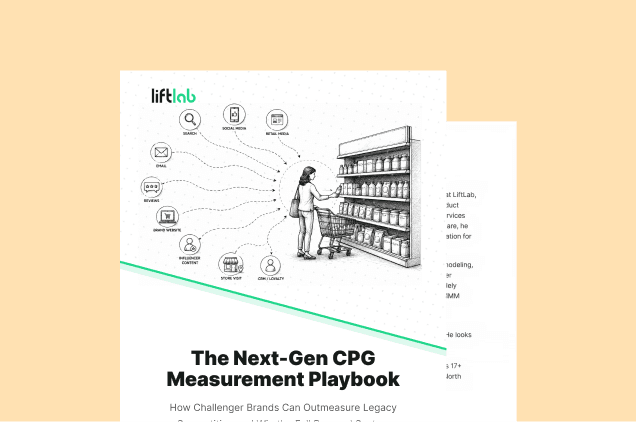
How Challenger CPG Brands Build a Measurement System That Outperforms Legacy Competition
DTC-born CPG brands rely on five metrics that systematically overstate performance. As they expand to retail, the measurement gap compounds, and most teams misdiagnose the crisis as a media problem. This playbook sets out the closed-loop architecture that permanently closes the gap, from the first geo experiment to a fully compoundin.
Download the Whitepaper →
How PlatformSense Ends the Speed-vs-Rigor Trade-off
Real-time dashboards are fast but unreliable. Quarterly MMMs are rigorous but arrive too late. This whitepaper explains how PlatformSense delivers daily MMM intelligence without sacrificing the econometric foundation your CFO demands.
Download the Whitepaper →
From Measurement to Budget Decisions Your CFO Will Approve
Most measurement systems stop at the insight. This playbook shows CMOs and CFOs how to integrate Agile MMM, incrementality testing, and budget planning into a single system that turns media data into defensible capital allocation decisions.
Download the Whitepaper →