- Platform
- Solutions
- Resources
- About
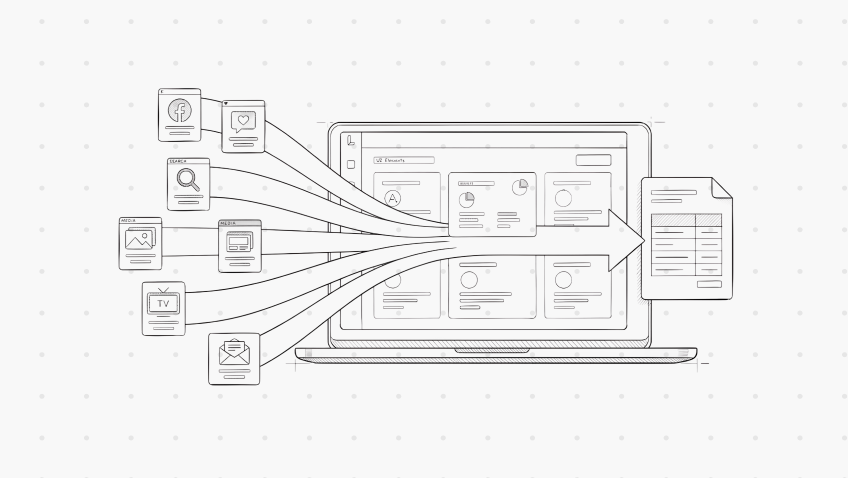
Compare budget scenarios and commit with confidence. Build full-funnel plans that forecast accurate outcome ranges and set strict financial guardrails, so you stay aligned even when Ad-Platforms or targets change.


Build plans that respect your actual business limits. Lock in pre-committed spend, set channel caps, and define minimum thresholds so your "optimal" plan is actually executable.

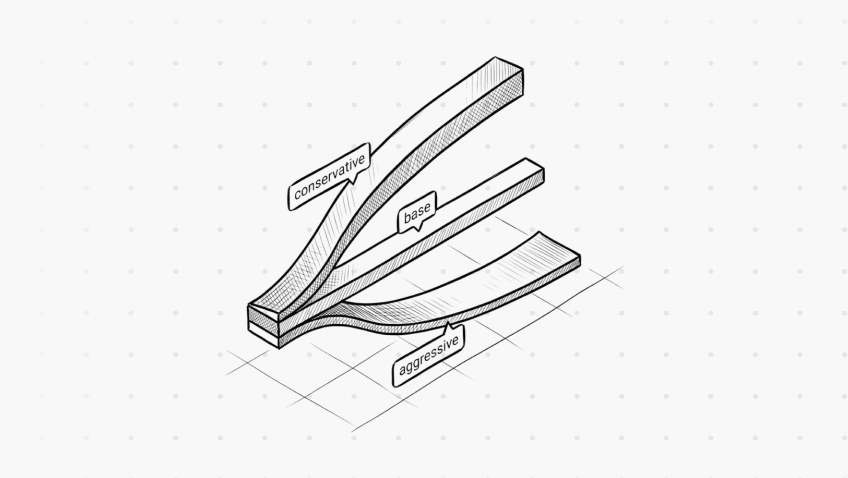
Move away from single-number predictions that create false precision. Generate Conserve, Maintain, or Accelerate scenarios to visualize the exact trade-offs between short-term efficiency and long-term growth.

Publish your chosen plan with explicit monitoring triggers (like CAC spikes or conversion rate drops) so your team knows exactly when to pause and re-plan mid-quarter.
Input your target KPI (revenue, profit, or customer acquisition) alongside strict commercial constraints.

Compare different budget allocations and forecast their outcomes as dynamic ranges.

Choose the optimal path and publish clear guardrails (max move percentages and stop-loss thresholds).

Monitor real-time performance against your triggers and re-plan instantly when platform volatility hits.

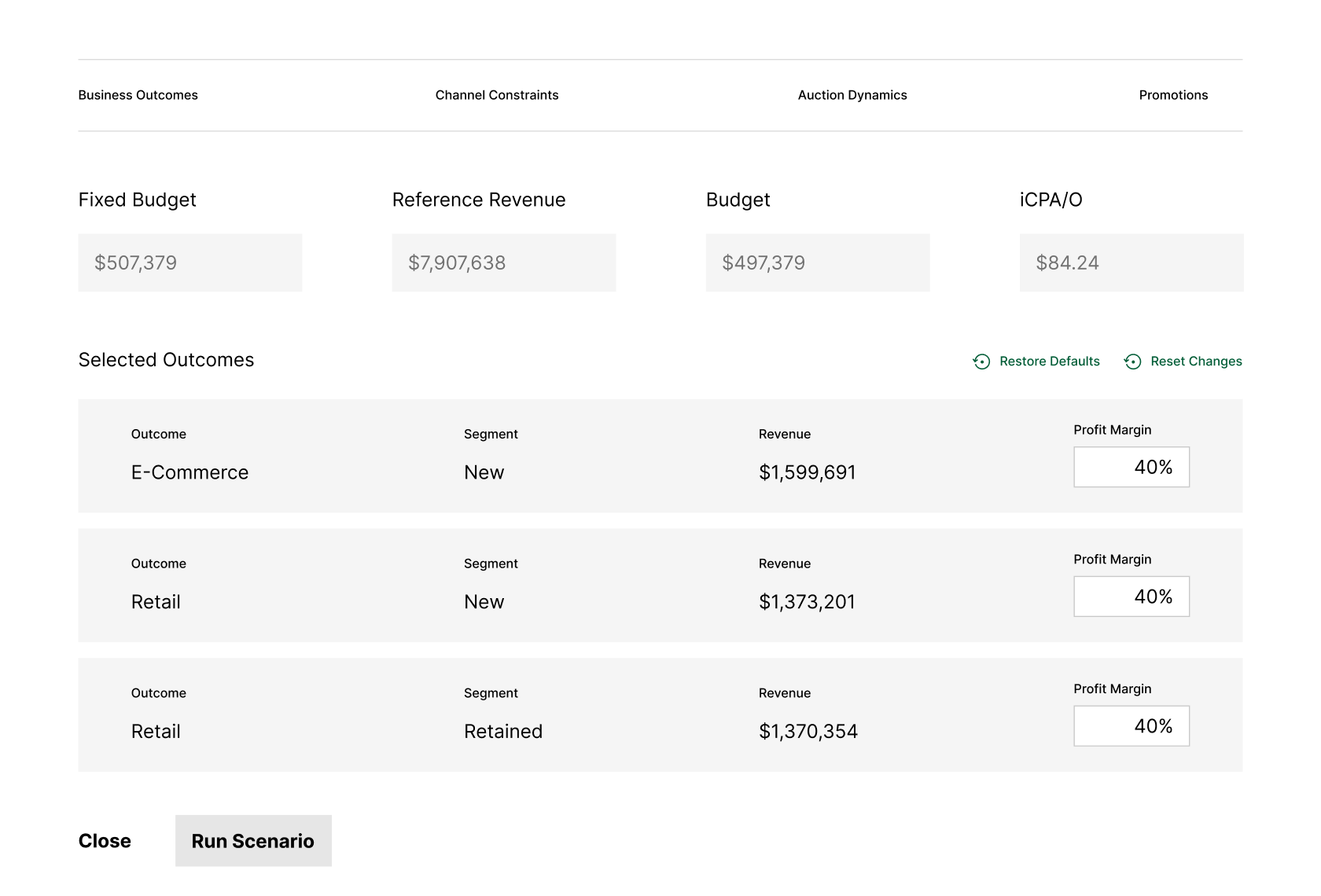
Run a Scenario
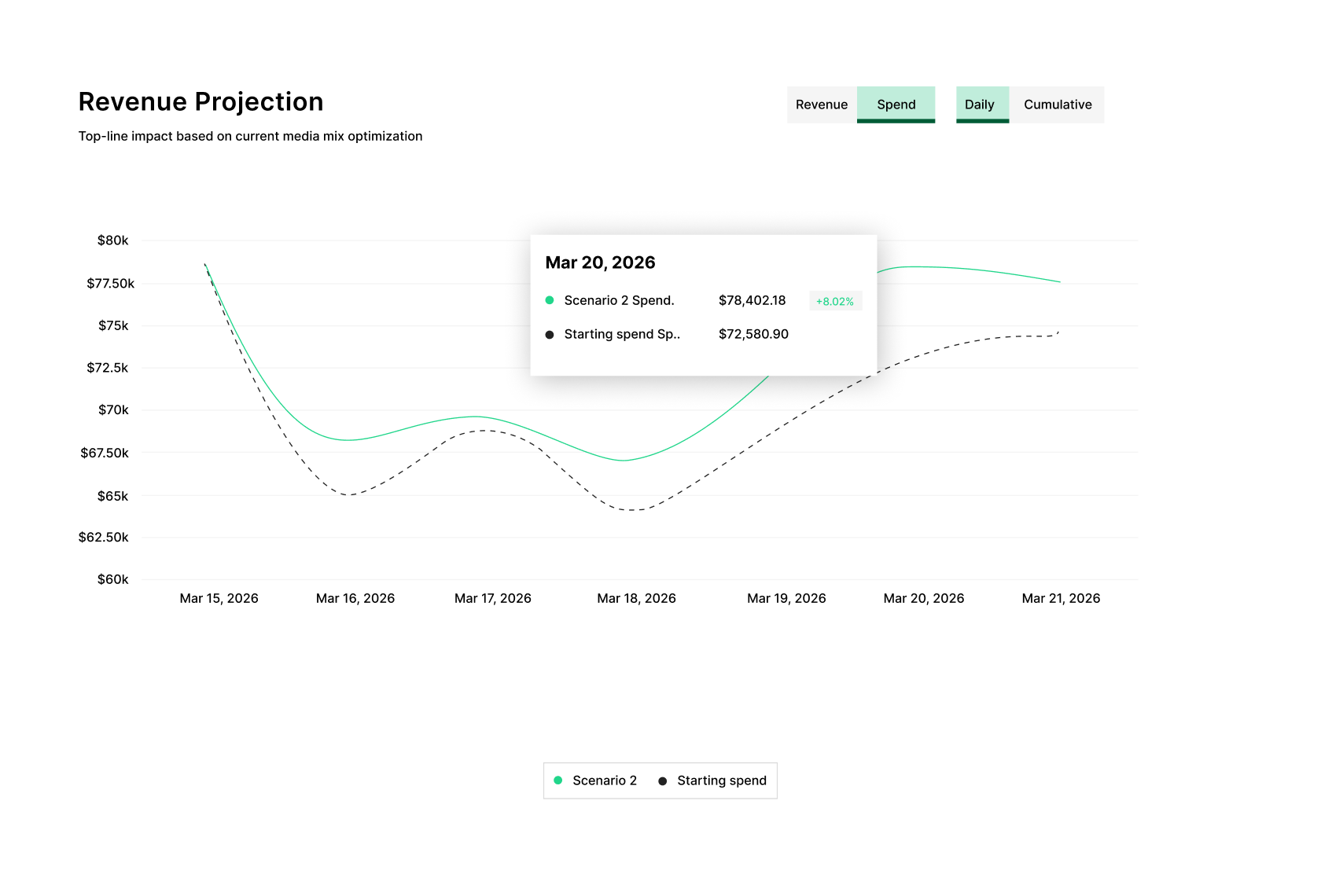
Forecast Ranges and Trade-offs
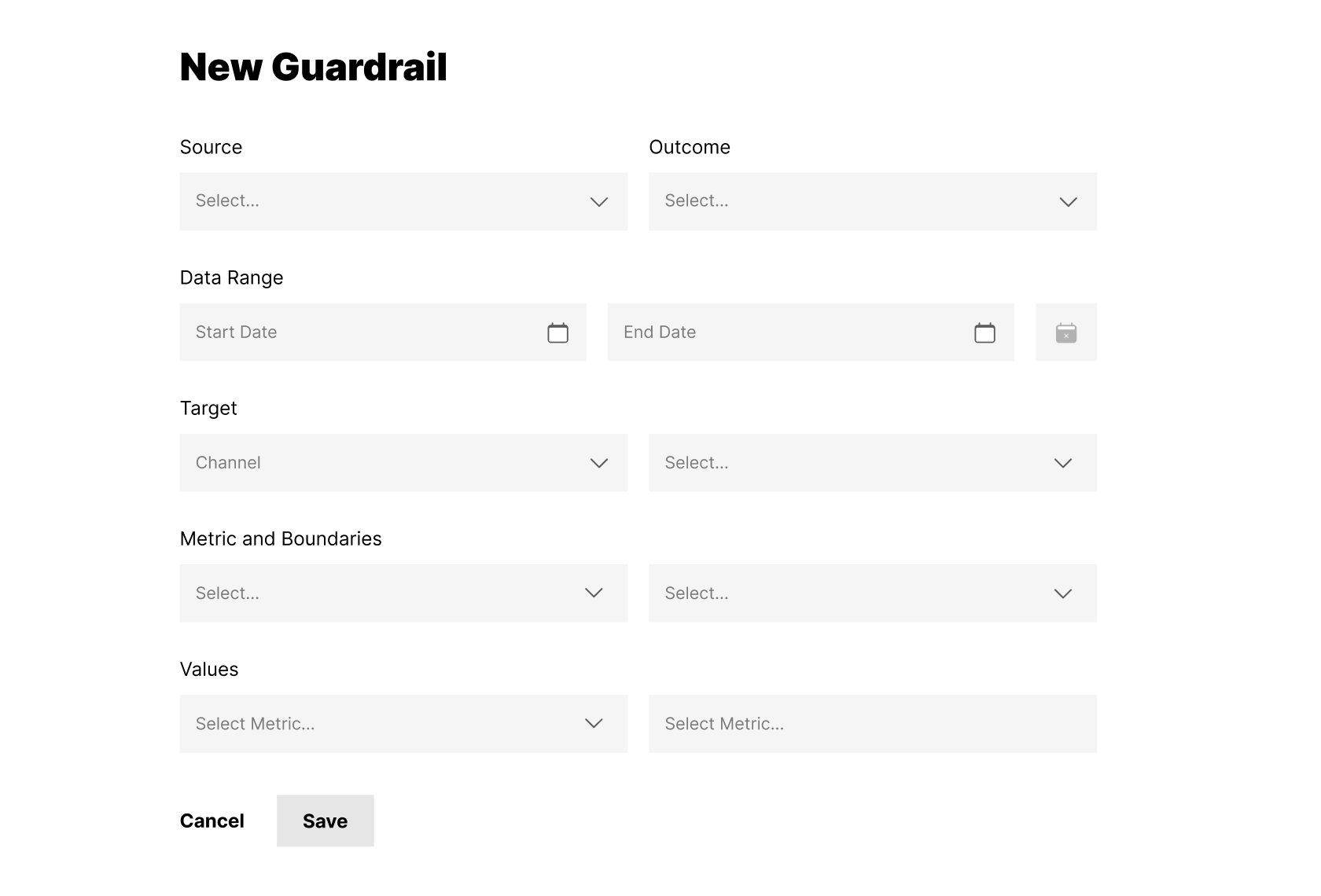
Setting up New Guardrails